
Roads
-
Road Network Length
----
-
Road Infrastructure Quality
3.8
-
Number of PPPs Reaching FC
----
-
Value of PPPs Reaching FC
----
-
Number of PPPs with Foreign Sponsors
----
-
Number of PPPs with Govt. Support
----
FC = financial closure, Govt. = government, km = kilometers, M = million.
Note: Quality of road infrastructure: 1 (lowest) – 7 (highest).
Sources: National Statistics Office of Georgia (Geostat). Infrastructure. https://www.geostat.ge/ka/modules/categories/93/regionuli-statistika; The Global Economy. Compare Countries. https://www.theglobaleconomy.com/compare-countries/ (accessed 29 April 2024).
Roads
Contracting Agencies
Key projects related to the development of Georgia’s road infrastructure and road maintenance on international and secondary roads are implemented by the Roads Department in coordination with the Ministry of Regional Development and Infrastructure. Meanwhile, the Land Transport Agency is a legal entity of public law that operates under the Ministry of Economy and Sustainable Development of Georgia. The agency serves as the technical expert and ensures the implementation of the functions delegated to it in the field of land transport, stipulated by the international treaties and agreements of Georgia.1 The Roads Department is expected to act as the contracting agency for PPP projects in Georgia’s road sector.
- 1Roads Department of Georgia. http://www.georoad.ge/?lang=eng&act=pages&func=menu&pid=1384436889.
Roads
Sector Laws and Regulations
Road transport is regulated by the basic Law on Road Transport which determines the main objectives, the management of this sector, and the general rules for permit issuance. The Law on Traffic and the Law on Roads are also applied to regulate the sector.1
The Law on Roads defines the rules for the use and protection of roads by road owners and road users, as well as by organizations that own the road and engineering structures. The law also states the amount of, and procedure for payment of, tolls established for the use of roads (use of infrastructure). However, as of 2023, there were no toll roads in Georgia. Applicable to roads of any significance within the territory of Georgia, the law establishes regulations on the proper arrangement of roads to ensure traffic safety.2 The table below describes the functions of various agencies associated with the road transport sector in Georgia.
- 1Ministry of Economy and Sustainable Development of Georgia. Legislation: Transport. http://www.economy.ge/?page=ecoleg&s=17&lang=en
- 2Government of Georgia. 2010. Law of Georgia on Roads. https://matsne.gov.ge/en/document/download/28420/17/en/pdf.
Regulating Agencies
Agency Function Ministry of Regional Development and Infrastructure - Serve as the coordinating body
- Develop and ensure the implementation of a unified state policy related to the development, design, and scientific-technical progress of the road network of international and domestic importance
Roads Department of Georgia - Design, build, and operate roads classified as regional and international
- Oversee safety in road sector
- Develop regulations and procedures
- Ensure gradual integration with the European Union road standards
- Ensure safety of road infrastructure
- Conduct rational planning for road infrastructure
- Develop an improved road management system
- Improve monitoring functions
- Ensure competitive environment in the sector
- Promote environmental protection
- Improve social and resettlement policy
- Ensure transparency of activities and public awareness
Land Transport Agency - Carry out activities within the powers granted by the legislation of Georgia
- Operates under the Ministry of Economy and Sustainable Development
- Perform the functions delegated to it in the field of land transportation, provided for by the international agreements of Georgia
- Develop technical regulations on safety and security in the course of movement of means of transport, transportation of passengers and cargo, as well as transportation of people and cargo in emergency situations
- Supervise the implementation of technical regulations
Sources: European Committee of the Regions, Division of Powers. Georgia Transport. https://portal.cor.europa.eu/divisionpowers/Pages/ Georgia-Transport.aspx; Government of Georgia. 2007. Law of Georgia on Administration and Regulation in the Field of Transportation. https://matsne.gov.ge/en/document/download/23692/9/en/pdf; Ministry of Economy and Sustainable Development of Georgia. Legislation: Transport. http://www.economy.ge/?page=ecoleg&s =17&lang=en; and Roads Department of Georgia. http://www.georoad.ge/?lang=eng&act=pages&func=menu&pid=1384436889.
Foreign Investment Restrictions
COMPAREDOWNLOADParameter 2017 2018 2019 2020 2021 2022 2023 Maximum allowed foreign ownership of equity in greenfield projects 100% 100% 100% 100% 100% 100% 100% Note: Foreign ownership is not restricted in Georgia. Only two laws specify that foreign and local investors have equal rights. Source: Parliament of Georgia. 1997. Civil Code of Georgia. https://matsne.gov.ge/en/document/view/31702?publication=131; Parliament of Georgia. 1995. Constitution of Georgia. https://matsne.gov.ge/en/document/view/30346?publication=36.
Standard Contracts
COMPAREDOWNLOADType of Contract Availability PPP/concession agreement Performance-based operation and maintenance contract Engineering, procurement, and construction contract - Yes
- No
Source: Asian Development Bank. 2019. Public–Private Partnership Monitor. Second Edition. https://www.adb.org/sites/default/files/publication/509426/ppp-monitor-second-edition.pdf.
Roads
Sector Master Plan
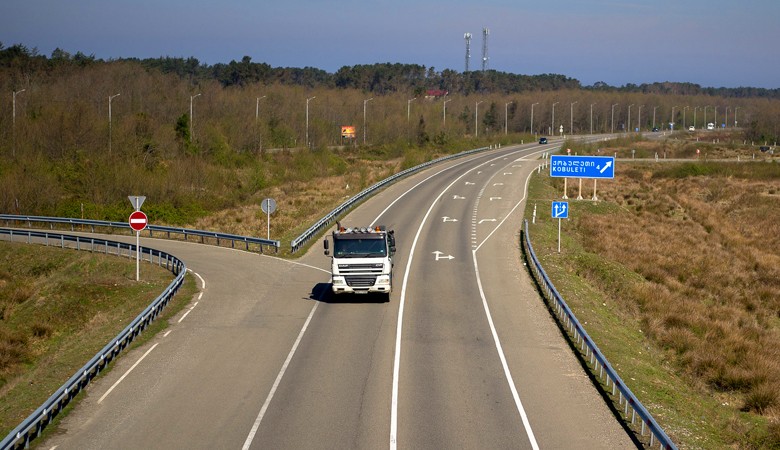
The main road network in Georgia includes 40,044 km, with 1,593.4 km of national and international roads (including the East–West Highway Corridor), 5,460.3 km of secondary roads, and 32,990 km of local roads.1
There is no specific Road Sector Master Plan in Georgia. However, building on the previous work, Georgia’s National Road Safety Strategy 2022–2025 sets out the key directions recommended by international organizations and global experts for successful, sustainable, and long-term road safety management in Georgia.2
In addition, the Vision 2030: Development Strategy of Georgia was approved by Resolution 517 of the Government of Georgia on 3 November 2022, which establishes strategic directions by sectors. Among them, in relation to the roads of international and domestic importance, it sets the baseline indicators and improvement goals. One of the key objectives is to increase the transit potential, to develop and complete regional and municipal administrative, as well as industrial and cultural centers connecting roads, circular regional roads of tourist importance, and other road infrastructure. This includes the construction, modernization, reconstruction, rehabilitation, and current and periodic repair of highways of international and domestic importance, considering the international road safety standard.
Overall, road infrastructure has significantly improved, facilitating trade and increasing Georgia’s value proposition as a transit country. The East–West Highway, as well as the north and south directions, is the main transportation axis that allows access to all regions and cities of the country. Accordingly, the construction of the highway is a priority of the Georgian government. A certain part of the international road network has already been rehabilitated and will be further improved by the ongoing works on the East–West Highway. The main sections of the highway are scheduled to be completed by the end of 2024.3
According to the vision document, until 2025, it is planned to rehabilitate and periodically repair up to 1,500 km of various highway sections and construct and rehabilitate up to 150 bridge crossings, after the implementation of which, in parallel with the completion of the current highway projects, 95% of international highways and 80% of domestic highways will be repaired.4 Based on 2023 data, 89% of international roads and 69% of domestic roads are in good condition.
- 1National Statistics Office of Georgia (Geostat). Infrastructure. https://www.geostat.ge/ka/modules/categories/93/regionulistatistika.
- 2Government of Georgia. 2016. Georgia’s National Road Safety Strategy. https://www.unece.org/fileadmin/DAM/trans/doc/2018/ UNDA/Georgia_s_ National_Road_Safety_Strategy_2016.pdf.
- 3Ministry of Economy and Sustainable Development, 2023–2030 National Transport and Logistics Strategy of Georgia. https://www.economy.ge/uploads/files/2017/transport/2023/strategy/transportisa_da_logistikis_strategia_2023_2030.pdf.
- 4Government of Georgia. N.D. Vision 2030: Development Strategy of Georgia. https://www.gov.ge/files/428_85680_321942_ khedva-2030-saqarthvelos-ganvitharebis-strategia-1.pdf.
Projects under Preparation or Procurement
There are no active PPP projects in Georgia’s road sector. According to the PPP Agency, since adopting the PPP Law and creating the Agency, only one road project was discussed as a potential PPP, but there were no further developments.
There is no available data for the number of PPP projects in Georgia’s road sector that are under preparation and procurement.
Roads
Features of Past PPP Projects
Procurement of PPP Projects
There is no available data for the number of PPP projects procured through various modes (direct appointment, unsolicited bids, and competitive bids) in Georgia’s road sector.
PPP Projects Reaching Financial Close
There are no financially closed PPP projects in the road sector.
PPP Projects with Foreign Sponsor Participation
There is no available data for the number of PPP projects that have received participation from foreign sponsors in Georgia’s road sector.
Government Support to PPP Projects
There is no available data for the number of PPP projects in Georgia’s road sector that have received government support(viability gap funding mechanism, government guarantees, and availability or performance payment).
Payment Mechanism for PPP Projects
There is no available data for the number of PPP projects that have received payment in the form of user charges and government pay (offtake) in Georgia’s road sector.
Typical Risk Allocation for PPP Projects
COMPAREDOWNLOADRisk Type Private Public Shared Traffic risk Collection risk Competition risk Government payment risk Environmental and social risk Land acquisition risk Permits Geotechnical risk Brownfield risk: inventories studies, property boundaries, project scope Political risk Force majeure Foreign exchange risk Construction risk - Not Applicable
- *Details on typical Risk allocation are not available for this sector
Financing Details
Parameter 2023 PPP projects with foreign lending participation UA PPP projects that received export credit agency/international financing institution support UA Typical debt-to-equity ratio UA Time for financial closure UA - UA = Unavailable
Roads
Tariffs
There are no tariffs in the road sector in Georgia.
Roads
Challenges
Despite the numerous infrastructure projects implemented recently, the country’s basic infrastructure is still not fully developed and there is still a lot of work to be done in this direction. For example, 69% of domestic roads are in good condition; hence, further repair and rehabilitation work is required.
-
Railways
-
Railway Network Length
1,415 km
-
Number of Passengers
597 M pkm
-
Freight Volume
2,963 M ton-km
-
Railway Infrastructure Quality
3.9
-
Number of PPPs Reaching FC
----
-
Value of PPPs Reaching FC
----
-
Number of PPPs with Foreign Sponsors
----
-
Number of PPPs with Govt. Support
----
FC = financial closure, Govt = government, km = kilometers, M = million, pkm = passenger-kilometer, ton-km = ton-kilometer.
Notes: Passenger-kilometer refers to the transport of one person over 1 km, with the data expressed in millions of pkm. Ton-kilometer refers to the transport of a ton of cargo over 1 km, with the data expressed in millions of ton-km. Quality of railway infrastructure: 1 (lowest) – 7 (highest).
Sources: Georgian Railway. Presentation For the First Nine Months of 2023. https://cdn4.grmedia.com.ge/app/uploads/2023/12/GRPresentation-9M-2023-1.pdf; The Economist Intelligence Unit. Infrascope 2019: Georgia Country Profile. https://infrascope.eiu.com/; The Global Economy. Railroad Infrastructure Quality—Country Rankings. https://www.theglobaleconomy.com/rankings/railroad_quality/ (accessed 29 April 2024).
Railways
Contracting Agencies
From 1 July 2023, the National Railway Safety Authority was established for technical regulation and supervision of the field of railway transport in the form of the National Railway Transport Agency. The agency’s main functions include the technical regulation and supervision of the field of railway transport within the framework of the powers granted by the legislation of Georgia, primarily ensuring railway safety, transportation of dangerous goods, certification of railway operators, infrastructure managers, railway training institutions, and train drivers.1 The Ministry of Economy and Sustainable Development (MOESD) implements the state policy and serves as a coordinating body overseeing the agency.
JSC Georgian Railway is a state-owned enterprise with the authority to raise capital in the open market and acts as the contracting agency for PPP projects in the railway sector. The Georgian Railway is, by statute, Georgia’s only integrated railway company. It principally provides freight transporting services for diverse cargo, including oil, oil products, ores, and grains, which mostly originate in the East and are transported from Central Asia across the Caspian Sea through Georgia and onward to the Black Sea. The group also provides passenger services and freight forwarding services. The Georgian Railway sets its tariffs independently without requiring approval from any governmental entity.2
- 1Ministry of Economy and Sustainable Development of Georgia. 2024. Annual Report on the Implementation of the 2023–2024 Action Plan of the National Transport and Logistics Strategy of Georgia for 2023–2030. https://www.economy.ge/uploads/ files/2017/transport/2024/transporti_logistika/2023_clis_angarishi_transportisa_da_logistikis_strategia.pdf.
- 2Georgian Railway. 2023. Annual Report 2022. https://cdn2.grmedia.com.ge/app/uploads/2023/10/Annual_Report_2022-2.pdf.
Railways
Sector Laws and Regulations
The railway is regulated by the basic Railway Code of Georgia which determines the basic principles for organizing transportation, general rules for freight carriage, and registration. It determines the economic, legal, organizational, and technological bases for the functioning of rail transport, and its place and role in Georgia’s economy and social sector. The Railway Code also regulates legal relations arising during the use of railway services and determines the rights, obligations, and responsibilities of participants of these relationships.1
In February 2023, the Government of Georgia commenced phase I of the Railway Sector Reform which aims to improve the legal and institutional framework in line with EU requirements. As a follow-up of the amendments to the Railway Code, a national safety authority was established on 1 July 2023 as LEPL Rail Transport Agency under the Ministry of Economy and Sustainable Development. At the initial stage, it has been tasked with the safety certification of railway operators and infrastructure managers, certification of train drivers, and transportation of dangerous goods. At the same time, an independent state unit, the Transport Safety Investigation Bureau of the Ministry of Economy and Sustainable Development will be authorized to investigate railway incidents and accidents.
The transitional period for full-fledged implementation of these functions is set until 1 January 2025. Moreover, the Government Ordinance setting instructions and rules to conclude a public service contract for rail passenger services has been adopted, entering into force in January 2024.2 The table below provides a snapshot of the functions of various agencies associated with the railway sector in Georgia.3
- 1Government of Georgia. 2005. Law of Georgia on Railway Code of Georgia. https://matsne.gov.ge/ka/document/ download/14404/6/en/pdf.
- 2Information provided by the Transport and Logistics Development Policy Department under the Ministry of Economy and Sustainable Development.
- 3European Committee of the Regions, Division of Powers. Georgia - Transport. https://portal.cor.europa.eu/divisionpowers/Pages/ Georgia-Transport.aspx.
Regulating Agencies
Agency Function Ministry of Economy and Sustainable Development - Implements the state policy in the railway sector
- Serves as the coordinating body
- Oversees the functioning of the technical regulator, National Railway Transport Agency
National Railway Transport Agency - Technical regulation and supervision of the railway sector
Georgian Railway - Oversees safety in the railway sector
- Handles core train operations
- Container handling
- Construction
- Property management
Source: Asian Development Bank. 2014. Georgia Transport Sector Assessment, Strategy, and Road Map. https://www.adb.org/sites/default/files/institutional-document/34108/files/georgia-transport-assessment-strategy-road-map.pdf.
Foreign Investment Restrictions
COMPAREDOWNLOADParameter 2017 2018 2019 2020 2021 2022 2023 Maximum allowed foreign ownership of equity in greenfield projects 100% 100% 100% 100% 100% 100% 100% Note: Foreign ownership is not restricted in Georgia. Only two laws specify that foreign and local investors have equal rights.
Source: Parliament of Georgia. 1997. Civil Code of Georgia. https://matsne.gov.ge/en/document/view/31702?publication=131; Parliament of Georgia. 1995. Constitution of Georgia. https://matsne.gov.ge/en/document/view/30346?publication=36.
Standard Contracts
COMPAREDOWNLOADType of Contract Availability PPP/concession agreement Performance-based operation and maintenance contract Engineering, procurement, and construction contract - No
- Unavailable
Source: Asian Development Bank. 2019. Public–Private Partnership Monitor. Second Edition. https://www.adb.org/sites/default/files/publication/509426/ppp-monitor-second-edition.pdf.
Railways
Sector Master Plan
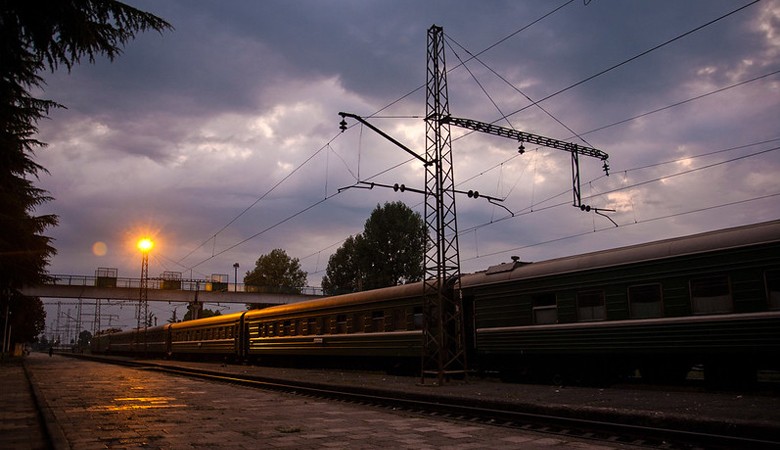
The Georgian Railway’s main line is 1,408 km and fully electrified (of which 293 km is double-tracked). It is a broad-gauge railway located on the western part of the land bridge connecting Azerbaijan and Armenian railways and the three existing ports on the Black Sea (Batumi, Poti, and Kulevi).
The Georgian Railway rail network, together with CFSC Azerbaijan Railway, forms the Caucasus railway corridor, a key segment of the Transport Corridor Europe–Caucasus–Asia; an international transportation network aimed at the development of regional emerging market economies through the promotion of international trade flows. The Georgian Railway’s mainline is a key link in the shortest route from Central Asia and the Caspian Sea to the Black Sea and the Mediterranean Basin. One of the new developments is constructing the new Baku–Tbilisi–Kars railway line, which is currently in test mode and expected to be ready in 2024. After its completion, the Georgian Railway network will also be connected to the railway network operated by Turkish Railway. On 26 October 2023, three railway operators from Azerbaijan, Georgia, and Kazakhstan signed an agreement to establish a joint enterprise on an equal basis. This new joint entity will be in charge of developing the Transcaspian International Transport Route and multimodal service along the way. The new company, Middle Corridor Multimodal Ltd., is going to operate within the Astana International Financial Center. Within these joint efforts, the company will provide services as a single-window system, ensure delivery time, and follow the same policy on developing the multimodal service from the People’s Republic of China (PRC) to Europe and from Türkiye to the PRC.1
There is no specific Railway Sector Master Plan in Georgia. However, to improve and optimize the service provided to freight and passenger traffic, the JSC Georgian Railway has started implementing the Railway Modernization Project (modernization of the existing railway line from Zestaponi to Kharagauli and construction of a new railway line from Moliti to Khashuri). The ongoing project is 98% complete. Modernization enhances the infrastructure for railroad operations in a very challenging, high-gorge area of the country, leading to reduced travel time and improved safety levels. The annual throughput capacity will rise from 27 million tons to 48 million tons. The project will be finalized in 2024.2
On 15 August 2023, the government adopted a National Transport and Logistics Strategy 2023–2030 and an action plan for 2023–2024. The strategy sets a long-term vision, goals, and objectives to promote the development of Georgia as a regional transport and logistics hub. High priority is given to improving transport and logistics infrastructure, establishing an effective legal and institutional framework in the transport field, developing efficient and quality transport and logistics services, reducing carbon footprint from transport, and integrating Georgia into the European Union transport system and global value chains. In particular, the strategy strives to achieve three strategic goals: (i) increasing the efficiency and competitiveness of the logistics sector; (ii) development of human capital in transport and logistics; and (iii) sustainable development of transport sectors and safe transport connections and corridors.
The 2023–2024 action plan envisages 48 activities, including legal and institutional reforms, infrastructure projects, education and awareness-raising activities, and transport digitalization.
The strategy also states that the country has adhered to or plans to adhere to several corridor initiatives involving railway transport (i.e., Middle Corridor, Kars–Tbilisi–Baku). As of 2023, 98% of the works envisaged by the Railway Modernization Project have been completed. One of the key objectives outlined in the strategy is restructuring and reforming the railway transport sector in Georgia. This reform is based on the normative acts stipulated by the Association Agreement, Directive 2012/34/EC On the Establishment of a Single European Railway Area and Directive 2004/49/EC On the Safety of the Railways of the Union. These directives mainly consider:
- legal and financial separation of railway operators (passenger and freight) and infrastructure manager;
- independence of the infrastructure manager’s main functions and its financing rules;
- creation of a railway transport regulatory body;
- creation of the state safety authority and requirements for granting safety certificates and authorizations; and
- creation of a railway incident and case investigation bureau.
The strategy also identifies the attraction of the private sector to rail freight transportation as one of the priority directions. In this regard, it is necessary to work with both forwarding companies and international shipping lines that have experience operating container block trains in different parts of the world.
According to the Georgian Railway’s 2022 Annual report, the government has shown strong support for the group’s initiatives over the years, including the contribution of land and other assets to the group’s fixed capital projects (in particular, the Modernization Project), the exemption of linear infrastructure (such as railroads and transmission lines) from property tax and an agreement to restrict dividend payments, as well as the change of ownership under the group’s Eurobond prospectus.
Some prominent examples of the government’s support for the Georgian Railway are:
- The government handed over 182 hectares of land for the Tbilisi Railway Bypass Project in 2010 and 2011, with a value of GEL33 million, to Georgian Railway Capital. This land comprised approximately 40% of the total land required for the Tbilisi Bypass railroad.
- Contributions of land and other related assets for Georgian Railway’s projects (mostly for the Modernization Project and Tbilisi Bypass Project) were also made from 2012 to 2016, amounting to around GE10 million.
- Linear infrastructure such as railroads and transmission lines have been made exempt from property tax in Georgia.
In 2015 and 2016, shareholders’ dividends financed the building of a new passenger station in Batumi.
- 1Kursiv Media, Azerbaijan, Georgia and Kazakhstan to establish a company for TITR development, 2023. https://kz.kursiv.media/ en/2023-10-27/azerbaijan-georgia-and-kazakhstan-to-establish-a-company-for-titr-development/.
- 2Information provided by the Transport and Logistics Development Policy Department under the Ministry of Economy and Sustainable Development.
Projects under Preparation and Procurement
There is no available data for the number of PPP projects in Georgia’s railway sector being prepared and procured.
Railways
Features of Past PPP Projects
Procurement of PPP Projects
There is no available data for the number of PPP projects procured through various modes (direct appointment, unsolicited bids, and competitive bids) in Georgia’s railway sector.
PPP Projects Reaching Financial Close
There are no financially closed PPP projects in the railway sector.
PPP Projects with Foreign Sponsor Participation
There is no available data for the number of PPP projects that have received participation from foreign sponsors in Georgia’s railway sector.
Government Support to PPP Projects
There is no available data for the number of PPP projects that have received government support (viability gap funding mechanism, government guarantees, and availability or performance payment) in Georgia’s railway sector.
Payment Mechanism for PPP Projects
There is no available data for the number of PPP projects that have received payment in the form of user charges and government pay (offtake) in Georgia’s railway sector.
Typical Risk Allocation for PPP Projects
COMPAREDOWNLOADRisk Type Private Public Shared Demand risk Revenue collection risk Tariff risk Government payment risk Environmental and social risk Land acquisition risk Interface Handover Political risk Foreign exchange risk Early termination risk - Not Applicable
- *Details on typical Risk allocation are not available for this sector
Financing Details
Consideration Status PPP projects with foreign lending participation UA PPP projects that received export credit agency/international financing institution support UA Typical debt-to-equity ratio UA Time for financial closure UA - UA = Unavailable
Railways
Tariffs
There are no active PPP projects in Georgia’s railway sector. Although rail transportation in Georgia is a statutory monopoly, the Georgian Railway’s pricing policies are not subject to direct government regulation. Currently, the railway business is fully deregulated in Georgia. The Georgian Railway sets its tariff policy independently for all services, including tariffs for freight transportation and related services. In addition, it can change its tariffs with one month’s prior notice to its customers. The company has a written tariff policy (published on its website) specifying methods and formulas for determining the various tariffs applicable to its services. It provides various services, with each activity having its own tariff.
Therefore, the Georgian Railway sets tariffs for domestic trains independently. At the request of the government, Georgian Railway sets affordable ticket prices, below the market rate. In 2022, the average tariff per passenger-kilometer was 0.02 cents. Tariffs for international transportation are set through negotiations between countries and are denominated in Swiss Francs.1 According to the Georgian Railway’s website, one-way passenger ticket prices from Yerevan to Tbilisi range from CHF25 to CHF64.
In line with Georgia’s obligations to align national laws with EU legislation under the Association Agreement, the government has an obligation under the EU social market economy principle to compensate the Georgian Railway for its loss-making passenger transportation business and to subsidize certain activities of the Infrastructure Strategic Business Unit. In 2020, the Parliament of Georgia adopted an amendment to the Railway Code recognizing railway passenger transportation services as a public service obligation and prohibited cross-subsidies from the freight transportation operator as required by principles set out in the EU Passenger Transportation Regulation. Accordingly, the Georgian Railway and the government are expected to enter a public service contract to compensate Passenger Strategic Business Unit losses by 2024. This contract is expected to define specific passenger rail routes and set out the conditions for the agreement of costs for such routes between the Georgian Railway and the government or the relevant competent authority, as well as the compensation to be granted to the company for operating nonprofitable passenger routes.
- 1Georgian Railway, Management Discussion and Analysis for 9 months and 3Q Ended 30 September 2023. https://cdn4.grmedia. com.ge/app/uploads/2023/11/MDA_q3_2023.pdf.
Railways
Challenges
There is no clear vision or strategy to align development with the national transport strategy or integration with other modes.
According to the 2023–2030 National Transport and Logistics Strategy of Georgia, the main challenges in the railway sector in Georgia as the following:
- In terms of railway infrastructure, the main issue is the 17-km section between Khashuri and Zestafon, on which the speed is limited due to the mountainous terrain. The time between Poti and Tbilisi is currently 10–15 hours. An additional challenge is the existing locomotive fleet of the Georgian Railways, part of which is outdated and needs to be modernized.
- Rail transport is an almost completely unregulated sector, which, among other things, is manifested in the fact that JSC Georgian Railway has several functions and duties, which in their content belong more to the public obligation or function implemented by the state. This makes it difficult for Georgian Railway, as a legal entity under private law, to fully realize its commercial interests and thereby increase its competitiveness in transportation/shipping operations. This kind of institutional arrangement of the railway sector is an outdated practice, considering the best European and international experience. In this regard, an important challenge is the implementation of eight legislative acts of the EU in the field of railway transport under the Association Agreement, which, taking into account the requirements of the aforementioned regulations and their content, will lead to a complete reformation and restructuring of the railway transport sector.
- The potential of the middle corridor is not fully exploited. The main challenges are operational difficulties, imbalance of freight turnover between East and West, volatility of scheduled block trains, absence of container tracking systems, and the need for the development of direct container ferry services on the Black Sea.
-
Ports
-
Number of Ports
4
-
Container Traffic
285,000 TEU
-
Port Infrastructure Quality
4.1
-
Number of PPPs Reaching FC
----
-
Value of PPPs Reaching FC
----
-
Number of PPPs with Foreign Sponsors
----
-
Number of PPPs with Govt. Support
----
MTPA = million tons per annum, TEU = twenty-foot equivalent unit, UA = unavailable.
Note: Quality of port infrastructure: 1 (lowest) – 7 (highest).
Sources: The Economist Intelligence Unit. Infrascope 2019: Georgia Country Profile. https://infrascope.eiu.com/; Geostat. Volume of carried freight in ports and terminals of Georgia by types. https://www.geostat.ge/en/modules/categories/802/maritime-transport-statistics; and Maritime Transport Agency. https://www.mta.gov.ge/ka/content/171; The World Bank, Logistics Performance Index (LPI), 2023. https://lpi.worldbank.org/international/scorecard/radar/C/GEO/2023 (accessed 29 April 2024).
Ports
Contracting Agencies
The Maritime Transport Agency of the Ministry of Economy and Sustainable Development of Georgia carries out technical regulation of the maritime industry in conformity with the legislation of Georgia. The Maritime Transport Agency exercises state control over the flag and seaports of Georgia and drafts and issues legal acts within the scope of its authority on behalf of Georgia.1
- 1Government of Georgia. 1997. Law of Georgia on Maritime Code of Georgia. https://www.ilo.org/dyn/natlex/docs/ ELECTRONIC/90471/118654 /F-467050042/GE090471.
Ports
Sector Laws and Regulations
The Maritime Code of Georgia regulates relations with maritime navigation. The rules of the code apply to maritime carriage carried out in direct multimodal or direct water transportation in cases directly referred to in the code. This code also applies to matters not addressed by special legislation regulating such carriage.
The Law of Georgia on Maritime Space determines the legal status of the internal waters, territorial sea (waters), contiguous zone, exclusive economic zone, and continental shelf of Georgia in the Black Sea, in accordance with universally recognized principles and norms of international law.
The Law of Georgia on Maritime Rescue Service regulates the rules for assisting all persons, vessels, and/or aircraft in distress at sea regardless of their national affiliation and status, and the rules for combating spills of oil and hazardous substances resulting from maritime incidents.
Seafaring is a regulated profession, and maritime higher education programs are regulated. Therefore, the Law of Georgia on education and certification of seafarers determines the unified standards and rules for education, training, and certification of seafarers in Georgia, as well as systems for monitoring maritime educational institutions, recognition and monitoring of maritime training institutions, and selection and monitoring of institutions.1 The Law of Georgia on education and certification of fisher-sailors establishes a unified system of education and certification of fisher-sailors under Georgian legislation and international standards of certification, training, and duty of fisher-sailors.2 The below table describes the functions of key institutions involved in regulating the port sector of Georgia.
- 1Law of Georgia on Education and Certification of Seafarers (December 2011). https://matsne.gov.ge/ka/document/ view/1556226?publication=10.
- 2Law of Georgia on Education and Certification of Fishermen–Seamen (June 2012). https://matsne.gov.ge/ka/document/ view/1698958?publication=1.
Regulating Agencies
Agency Function Ministry of Economy and Sustainable Development - Serve as the coordinating body.
- Oversee the functioning of the technical regulator, the Maritime Transport Agency
Maritime Transport Agency - Ensure the maritime safety and security of the merchant fleet flying the flag of Georgia and the ports of Georgia; develop regulations and procedures:
- Develop statistical and strategic directions
- Create a sustainable maritime system
- Build industry capacity and intensify cooperation with international maritime authorities
- Coordinate marine environment pollution prevention
- Coordinate search and rescue operations at sea
- Monitor the movement of ships in the territorial sea of Georgia
- Create a unified system of education and certification for seafarers
Sources: Maritime Transport Agency of Georgia. https://www.mta.gov.ge/en/content/78; Asian Development Bank. 2014. Georgia Transport Sector Assessment, Strategy, and Road Map. https://www.adb.org/sites/default/files/institutional-document/34108/files/georgia-transportassessment-strategy-road-map.pdf; and European Committee of the Regions, Division of Powers. Georgia - Transport. https://portal.cor.europa.eu/divisionpowers/Pages/Georgia-Transport.aspx.
Foreign Investment Restrictions
COMPAREDOWNLOADParameter 2017 2018 2019 2020 2021 2022 2023 Maximum allowed foreign ownership of equity in greenfield projects 100% 100% 100% 100% 100% 100% 100% Note: Foreign ownership is not restricted in Georgia. Only two laws specify that foreign and local investors have equal rights.
Source: Parliament of Georgia. 1997. Civil Code of Georgia. https://matsne.gov.ge/en/document/view/31702?publication=131; Parliament of Georgia. 1995. Constitution of Georgia. https://matsne.gov.ge/en/document/view/30346?publication=36.
Standard Contracts
COMPAREDOWNLOADType of contract Availability PPP/concession agreement Performance-based operation and maintenance contract Engineering, procurement, and construction contract - No
- Unavailable
Source: Asian Development Bank. 2019. Public–Private Partnership Monitor. Second Edition. https://www.adb.org/sites/default/ files/publication/509426/ppp-monitor-second-edition.pdf.
Ports
Sector Master Plan
There is no specific port sector master plan in Georgia.
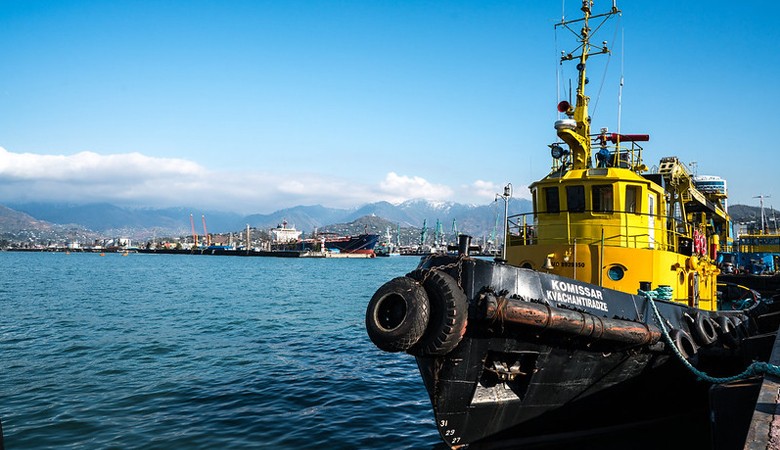
According to Georgia’s transport and logistics strategy 2023–2030, four seaports are open for international shipping in Georgia. All are owned or managed by private companies. All types of cargo (dry, container, liquid) are processed in Poti (APM Terminals and Pace Group) and Batumi ports (JSC KazTransOil). Processing liquefied gas, crude oil, petroleum products at the Kulevi Oil Terminal, and crude oil and petroleum products at the Supsa Oil Terminal is possible.
In 2022, 3.6 million tons, including 357,623 containers (TEU) were processed through the port of Poti, which is 18% more than in 2021. In terms of infrastructure, the use of oil product capacity in Poti Port in 2022 was 48%. The ferry terminal was loaded by 10%, and the usage rate of dry cargo capacity was 65%. In 2022, 55% of the container capacity was used. APM Terminals Poti proposes to invest at least $200 million in the port expansion project after the Georgian government issues a decree that will authorize the signing of an agreement between the government and APM Terminals Poti. APM Terminals Poti announced the intention to invest in the expansion of port infrastructure and superstructure to expand the existing port a few years ago.
The new facilities in Poti will support the growth of international trade through the Georgian transit corridor, greatly contributing to the country’s economy and development of the Middle Corridor. Part of the investment will be in modern technology and equipment, including fully electric ship-to-shore cranes—a first for Georgian ports, and will enable APM Terminals to offer world-class levels of productivity to ships calling at Poti. The construction is planned to boost Poti Sea Port’s yearly container capacity by at least 400,000 TEU, reaching an overall capacity of more than one million TEU. Phase one involves the development of a 6.8-hectare container yard extension, a new 330-meter quay, a 1.5-km breakwater, dredging for the access channel, turning basin, and berthing pocket and installation of two ship-to-shore cranes. The expanded port will be able to handle vessels of up to 13.5 meters draft, the largest vessels which can enter the Black Sea. The building timetable is projected to take up to 36 months.1
At the same time, the first phase of the construction of a new, multifunctional marine terminal in Poti Port, which is implemented by the Pace Group transport company, was completed in 2022. This will become a part of the powerful maritime infrastructure, which will significantly help Georgia to form its transport corridor. The US government’s Private Investment Corporation financed the project with $50 million. The new, ultra-modern terminal will be located on 25 hectares. The water area of the harbor will be deepened to 12 meters, and as a result, the port will be able to receive ships of up to 253 meters in length and up to 50,000 tons. After the full completion of the Pace Terminal project, the ultra-modern port and terminal complex in the new port of Poti will further strengthen the port infrastructure of the Pace Group. After the completion of the first phase, the cargo capacity of Pace Group increased by 2.5 million tons and almost doubled the current annual cargo turnover volume of the company.
Batumi is predominantly a liquid bulk terminal. Depending on the year, crude oil and oil products can represent up to 80% to 90% of the total turnover. In 2022, a record number of containers was recorded in Batumi Port, namely, 119,471 containers (TEU) were processed. One of the reasons for this can be considered a significant reduction in sea shipping rates and the activation of economic activity in the post-COVID period. In terms of capacity usage, the dry cargo terminal was loaded by 70% in 2022. Approximately 13% of the capacity of the oil terminal was used, and the ferry terminal of the Batumi Sea Port was loaded by 41%. In 2022, capacity of container shipments was 60%.
In 2021, an investment of $25 million was made for the construction of a multimodal carbamide terminal in the port of Batumi, which will strengthen the logistics corridor from the Central Asian countries to the Black Sea ports through Azerbaijan and Georgia. The contract between the company Wondernet Express Investment Group and the American corporation Trammo was signed in 2019 regarding the construction of the carbamide terminal in the port of Batumi. The terminal is envisaged to be equipped with the modern technology necessary for reloading mineral fertilizers and will be able to process up to 1,200,000 tons of fertilizer per year.
According to the 2023–2030 strategy, the development of existing as well as new port infrastructure is one of the priority directions of the government. One of the important objectives is the construction of the Anaklia Deep Sea Port, which will have the following advantages.
- Strategic location
- Ability to receive large ships (Panamax)
- Offer services based on the one-stop principle
- Fast and simple procedures
- Possibility of safe sailing at any time of the year
- High throughput
On 20 February 2023, the Ministry of Economy and Sustainable Development announced the Statement of Intent for the selection process of a private partner to co-invest in the PPP project of Anaklia New Deep Sea Port. Interested candidates were requested to submit legal documents and information related to their experience and financial standing before 19 June 2023. By the deadline, several candidates submitted their Statements of Qualifications. The selection process is currently ongoing. After the selection of the private partner, the state-owned company and the selected private partner will establish the institutional PPP company, where the state-owned company shall own 51% and the private partner 49% of the shares, which will later enter into a concession agreement with the government. To this end, Anaklia Sea Port LLC was established by the state in 2023. The government intends to make major capital contributions to the marine infrastructure, including a breakwater and dredging.
In March 2024, an international tender was announced for the design and construction of the marine infrastructure of the Anaklia Port. Phase one will have a minimum capacity to handle 600,000 TEUs per annum.2 The government program for 2021–2024 envisages the approval of the maritime transport strategy by the government.3 To develop the document, at the initial stage, the development and approval of the concept of strategic development of maritime transport was defined.
The concept document, as part of the maritime policy planning process, has been developed under Resolution No. 629 of the government on 20 December 2019, On Approval of the Rules for Development, Monitoring and Evaluation of Policy Documents.4 The concept of strategic development of maritime transport defines the vision, main principles, and tasks of the further development of the maritime sector, as well as creates a prerequisite for the preparation of basic indicators and strategy development. The concept aligns with the eighth goal of the Georgian Development Strategy and Vision 2030: increasing the competitiveness of Georgia’s transport and logistics sector and ensuring sustainable and effective transport links. At this stage, a working version of the concept document of strategic development of maritime transport is available at the Maritime Transport Agency’s website.5 The concept document defines the following principles and priorities:
- Support of Georgian sailors
- Promotion of maritime education
- Trade support principles
- Strengthening port capacity
- Emergence of new maritime services
- 1APM Terminals Poti. 2024. APM Terminals Poti is Ready to Make a Significant Investment and Commence the Expansion Project. 12 March. https://www.apmterminals.com/en/poti/our-port/news/2024/240312-apm-terminals-poti-significant-investmentand-commence-the-expansion-project.
- 2Information provided by the Transport and Logistics Development Policy Department under the Ministry of Economy and Sustainable Development.
- 3Government of Georgia. 2021. Government Program 2021 - 2024 For Building European State. https://ppp.gov.ge/app/upl oads/2022/01/%E1%83%A1%E1%83%90%E1%83%9B%E1%83%97%E1%83%90%E1%83%95%E1%83%A0%E1%83%9D %E1%83%91%E1%83%9D-%E1%83%9E%E1%83%A0%E1%83%9D%E1%83%92%E1%83%A0%E1%83%90%E1%83%9B %E1%83%90-2021-2024.pdf.
- 4Resolution No. 629 of the Government of Georgia on the Approval of the Procedure for Development, Monitoring and Evaluation of Policy Documents. 20 December 2019. https://matsne.gov.ge/ka/document/view/4747283?publication=1.
- 5Maritime Transport Agency, Concept for Strategic Development of Maritime Transport. https://www.mta.gov.ge/ka/news/247.
Projects under Preparation and Procurement
Ports Public-Private Partnerships under Preparation and Procurement
COMPAREDOWNLOADNote: The hyphen means there are no projects in the sector, or data is not available or not applicable, according to the database.
Source: PPP Agency and Ministry of Finance.
Ports
Features of Past PPP Projects
Procurement of PPP Projects
Ports Public-Private Partnerships procured through various modes
The Batumi Seaport Project, financially closed in August 2006, was an unsolicited proposal procured through a competitive bidding mode. The other unsolicited proposal was for the Batumi International Container Terminal project, which attained financial closure in September 2007.1
- 1World Bank. Infrastructure Finance, PPPs and Guarantees. Country Snapshots. Georgia. https://ppiworldbank.org/en/snapshots/ country/georgia (accessed 29 April 2024).
COMPAREDOWNLOADNote: : Only active and concluded projects are considered. The hyphen means there are no projects in the sector, or data is not available or not applicable, according to the database.
Sources: Asian Development Bank. 2019. Public–Private Partnership Monitor. Second Edition. https://www.adb.org/sites/default/files/ publication/509426/ppp-monitor-second-edition.pdf; and World Bank. Infrastructure Finance, PPPs and Guarantees. Country Snapshots. Georgia. https://ppi.worldbank.org/en/snapshots/country/georgia (accessed 29 April 2024).
PPP Projects Reaching Financial Close
Ports Public-Private Partnerships reaching Financial Close
The active PPP port projects that reached financial closure in 2019 are the Batumi Seaport and the Multifunctional Marine Terminal at the Port of Poti (Phase I).
COMPAREDOWNLOADNote: Only active and concluded projects are considered.
Sources: Asian Development Bank. 2019. Public–Private Partnership Monitor. Second Edition. https://www.adb.org/sites/default/files/publication/509426/ppp-monitor-second-edition.pdf; and World Bank. Infrastructure Finance, PPPs and Guarantees. Country Snapshots. Georgia. https://ppi.worldbank.org/en/snapshots/country/georgia (accessed 29 April 2024).
PPP Projects with Foreign Sponsor Participation
Ports Public-Private Partnerships with Foreign Sponsor Participation
The PPP port projects and their sponsors are: Batumi Seaport—Naftrans (Denmark), and Multifunctional Marine Terminal at the Port of Poti (Phase I)—PACE Group (Georgia).
COMPAREDOWNLOADPPP = public–private partnership.
Note: Only active and concluded projects are considered.
Source: World Bank. Infrastructure Finance, PPPs and Guarantees. Country Snapshots. Georgia. https://ppi.worldbank.org/en/snapshots/country/georgia (accessed 29 April 2024).
Government Support to PPP Projects
There is no available data for the number of PPP projects in the port sector that have received government support (viability gap funding mechanism, government guarantees, and availability or performance payment).
Payment Mechanism for PPP Projects
Payment Mechanisms for Ports Public-Private Partnerships
The Batumi Sea Port and the Multifunctional Marine Terminal at the Port of Poti (Phase I) both levy user charges.
COMPAREDOWNLOADNote: Only active and concluded projects are considered. The hyphen means there are no projects in the sector, or data is not available or not applicable, according to the database.
Source: World Bank. Infrastructure Finance, PPPs and Guarantees. Country Snapshots. Georgia. https://ppi.worldbank.org/en/ snapshots/ country/georgia (accessed 29 April 2024).
Typical Risk Allocation for PPP Projects
COMPAREDOWNLOADRisk Type Private Public Shared Demand risk Competition risk (exclusivity) Tariff risk Environmental and social risk Permits Geotechnical risk - Not Applicable
- *Details on typical Risk allocation are not available for this sector
Financing Details
Parameter 2023 PPP projects with foreign lending participation UA PPP projects that received export credit agency/international financing institution support UA Typical debt-to-equity ratio UA Time for financial closure UA - UA = Unavailable
Ports
Tariffs
Tariffs for APM Terminals
Parameter Unit $ (excluding VAT) Passenger Fee per passenger 10 General Cargo 0–4 days ton/day 0.5 5–30 days ton/day 1.0 >30 days ton/day 3.0 Full Containers Storage First and last partial day TEU/day 0.0 <7 days TEU/day 1.0 <14 days TEU/day 2.0 >14 days TEU/day 4.0 Empty Containers Storage First 8 days TEU/day 0.0 9th to 16th day TEU/day 0.5 17th and over TEU/day 1.0 TEU = twenty-foot equivalent unit, VAT = value added tax.
Source: APM Terminals. Services. www.apmterminals.com/en/services/.
Tariffs for Pace Terminal
Parameter Unit $ (excluding VAT) Full Containers Storage First and last partial day TEU/day - 20 foot Per Unit/Day 4.0 40 foot Per Unit/Day 5.0 Empty Containers Storage 20 foot Per Unit/Day 2.0 40 foot Per Unit/Day 3.0 TEU = twenty-foot equivalent unit, VAT = value added tax.
Source: PACE Group of Companies. https://www.pace.ge/service/10.
Ports
Challenges
According to the 2023–2030 National Transport and Logistics Strategy of Georgia, the main challenges in the port sector in Georgia are detailed below.
Insufficient reliability of Georgia seaports
In past years, cargo flow was affected (which is now much reduced) by frequent port closures due to bad weather, as well as the diversion of cargo to other ports, routes, and corridors. Despite the investments made by private investors, Poti and Batumi ports have significant operational limitations due to their configuration. Ports of Poti and Kulevi also have problems with depth (silting) that severely limit port accessibility and prevent sea carriers from using larger vessels. Due to the problem, port operators are forced to constantly control the depth of the entrance channels and dredging, which is a significant cost.
- Establishing a fixed schedule comes with challenges. Vessel access to the Black Sea depends on the Bosphorus Strait, thus making the access schedule difficult to predict. It should also be noted that there are three container berths in Georgia, one in Batumi and two in Poti. In 2017, the port of Poti acquired new, more powerful tugboats able to work in harsh weather conditions. As a result, port closures were reduced to approximately 15 days per year, instead of 90 days.
- No Georgian port has a terminal dedicated only to ferries that do not require the help of a pilot and a tugboat, which increases the cost of ferry shipments to and from Georgia.
- There is a lack of coordination between seaports, shipping lines, and rail operators, which reduces shipping efficiency and increases transportation costs.
Inconvenient land access to Georgia seaports
- Inconvenient land access was one of the main challenges of Batumi and Poti ports, however, in recent years, work has been undertaken to eliminate this challenge. In July 2018, the construction of a four-lane, one-kilometer overpass at the entrance to the city was completed to relieve traffic jams in the vicinity of the port. The overpass separated the Batumi container terminal and entrance roads to the city.
- Investments were made to increase the container handling capacity in Batumi Port, separating ferry and container spaces and adding warehouses.
- Road transport in Poti is mobilized at the wharves, from where the containers are transported by trucks to the container terminals located far from the wharf. However, most trucks that transport containers in both directions are outdated and unreliable. Also, the quality of access roads to terminals far from the port and the quality of terminal equipment is unfavorable, which hinders the handling of containers and significantly increases the duration of ferry cargo operations, negatively affecting the port’s competitiveness.
High tariffs for port services
According to ship servicing costs (disbursements presented to the ship owner for the costs incurred for servicing the ship in port), Georgian ports are among the most expensive in the Black and Marmara Seas basin. The combination of high tariffs, trade imbalances, and long waiting times at berths is an obstacle to attracting additional cargo flows to the ports. In addition, in some cases, service tariffs in ports are not transparent.
It should be noted that inland water transport is not currently regulated in Georgia. Consequently, there are challenges related to the security of domestic land transport.
-
Airports

-
Number of Airports
22
-
Passenger Capacity
0.52 M
-
Airport Infrastructure Quality
4.4
-
Number of PPPs Reaching FC
----
-
Value of PPPs Reaching FC
----
-
Number of PPPs with Foreign Sponsors
----
-
Number of PPPs with Govt. Support
----
FC = financial closure, Govt. = government, M = million.
Note: Quality of airport infrastructure: 1(lowest) – 7(highest).
Sources: ADB. Data Library. Cumulative Lending, Grant, and Technical Assistance Commitments. https://data.adb.org/dataset/cumulative-lending-grant-and-technical-assistance-commitments (accessed 25 July 2020); City Population. Airports. https://www.citypopulation.de/en/world/bymap/airports.html (accessed 25 July 2020); The Global Economy. Compare Countries. Quality of Air Transport Infrastructure. https://www.theglobaleconomy.com/comparecountries/ (accessed 25 July 2020); and World Bank. Air Transport, Passengers Carried. https://data.worldbank.org/indicator/is.air.psgr?locations=bd-kh-ge-kz-mm-pkpg-lk-uz-vn-cn-in-id-ph-th (accessed 25 July 2020).
Airports
Contracting Agencies
The Civil Aviation Authority of Georgia, or the Georgian Civil Aviation Agency, is the legal entity of public law under the Ministry of Economy and Sustainable Development of Georgia. The activities of the Civil Aviation Agency include three main processes: (i) regulation of civil aviation (development of legislative and bylaws regulating civil aviation and projects of amendments), (ii) certification of the aviation industry and aviation specialists, and (iii)continuous supervision.1
- 1Georgian Civil Aviation Agency, Law-making Program of the State Civil Aviation Agency for 2021–2023. https://www.icao.int/safety/GASP/GASP%20Library/National%20aviation%20safety%20plans/Georgia%20NASP%202022-2024.pdf.
Airports
Sector Laws and Regulations
The aviation sector operates under the Air Code of Georgia. The aim of the Code is to:1 (i) legally regulate the activities of Georgian aviation; (ii) determine unified standards of safety of aviation activities and aviation security; (iii) contribute to the stable development of air transportation and the free implementation of cargo and luggage shipment, conveyance of passengers, and other related services; (iv) improve air navigation services and ensure the safety, regularity, and effectiveness of air navigation; and (v) ensure the protection of the rights of Georgian air space users. The following table describes the functions of key government agencies associated with the airport sector.
- 1Government of Georgia. 1996. Law of Georgia on Air Code of Georgia. https://matsne.gov.ge/en/document/download/33298/21/en/pdf.
Regulating Agencies
Agency Function Ministry of Defense - Implements state supervision and regulation of aviation activities
Ministry of Economy and Sustainable Development of Georgia - Serves as the coordinating body
- Oversees the functioning of the technical regulator, the Georgian Civil Aviation Agency
- Implements state policy in the field of civil aviation
Georgian Civil Aviation Agency - Oversees safety in the airport sector
- Develops regulations and procedures
- Responsible for the monitoring and progress of civil aviation in Georgia
- State administration and safety oversight of the aviation sector
- Develops regulations and procedures, supervise their fulfillment, and provide services
Sources: European Committee of the Regions, Division of Powers. Georgia Transport
Georgian Civil Aviation Agency. https://gcaa.ge/?lang=en; and Government of Georgia. 1996. Law of Georgia on Air Code of Georgia. https://matsne.gov.ge/en/document/view/33298?publication=29.
Foreign Investment Restrictions
COMPAREDOWNLOADParameter 2017 2018 2019 2020 2021 2022 2023 Maximum allowed foreign ownership of equity in greenfield projects 100% 100% 100% 100% 100% 100% 100% Note: Foreign ownership is not restricted in Georgia. Only two laws specify that foreign and local investors have equal rights.
Source: Parliament of Georgia. 1997. Civil Code of Georgia. https://matsne.gov.ge/en/document/view/31702?publication=131; Parliament of Georgia. 1995. Constitution of Georgia. https://matsne.gov.ge/en/document/view/30346?publication=36.
Standard Contracts
COMPAREDOWNLOADType of contract Availability PPP/concession agreement Performance-based operation and maintenance contract Engineering, procurement, and construction contract - No
- Unavailable
Source: Asian Development Bank. 2019. Public–Private Partnership Monitor. Second Edition. Manila. https://www.adb.org/sites/default/files/publication/509426/ppp-monitor-second-edition.pdf.
Airports
Sector Master Plan
In May 2022, the Civil Aviation Agency approved the National Aviation Safety Plan. In April 2023, an updated 2023–2025 plan was issued. It was developed considering the European Regional Aviation Security Plan and the ICAO Global Aviation Security Plan. The plan includes the key aspects related to aviation safety, the vision, policy, and analysis of the Civil Aviation Agency as a supervisory agency, national aviation safety goals, objectives, indicators, and actions for further improvement of flight safety, monitoring the implementation of these actions, and identifying security risks and measures aimed at reducing them. The main goals outlined in the National Flight Safety Plan are:
- Goal N1: To achieve continuous reduction of operational safety risks
- Goal N2: Strengthen security oversight capacity
- Goal N3: Implement effective state flight safety programs
- Goal N4: Increase cooperation at the regional level to improve security
- Goal N5: Expand the use of industry programs and safety information-sharing networks byservice providers
- Goal N6: Ensure the existence of appropriate infrastructure to support safe operation
- Goal N7: Digitization and standardization of the main processes of the Civil Aviation Agency
Through an effective State Flight Safety Program, Georgia identifies national operational safety risks and ways to mitigate them. The program provides the National Flight Safety Plan with safety-related information. The program allows Georgia to manage its aviation activities consistently and proactively, assess the safety effectiveness of its civil aviation system, monitor the implementation of actions defined in the plan, and eliminate identified threats and deficiencies. Implementing the program allows Georgia to transfer authority from the ICAO Global Aviation Safety Plan and the European North Atlantic Regional Aviation Safety Plan. This provides an opportunity for Georgia to formulate initiatives to strengthen the program and achieve safety goals. In addition, safety data collected through the program contributes to implementing other national plans, such as the Air Navigation Plan.1
The Asian Development Bank approved $225,000 in technical assistance to conduct an airport sector assessment and elaborate a sector development strategy for 2032. The study included an assessment of the current capacity of the airports for passenger and cargo traffic and developing market demand projections, examining needs and opportunities for expansion or relocation of the current airports, development of substitute or additional locations, and examining the effectiveness of current arrangements for airport operations and possible alternatives, including public management and private sector concession schemes.2 The project was completed in 2023.
The government has been undertaking reforms to implement EU standards and legislative norms in Georgia’s civil aviation. Within the framework of the EU–Georgia Common Aviation Area Agreement, more than thirty regulations have already been introduced, including the protection of passenger rights, the inspection of foreign aircraft, the financial stability of airlines, reporting of aviation occurrences and other important regulations.3 Establishing a common aviation area focuses on changes in the air management system to further flight safety and air traffic capacity, which will be achieved through close cooperation between the EU and neighboring countries.
The process is managed according to the European Air Traffic Management Master Plan, one of the main components of which is the European/Local Single Sky Implementation mechanism. Control over the implementation of this process is carried out by the European Organisation for the Safety of Air Navigation.
Georgia has three international airports located in the cities of Tbilisi, Kutaisi, and Batumi, and three domestic airports. Tbilisi International Airport is the largest hub, facilitating extensive domestic and international air travel connections. Kutaisi International Airport and Batumi International Airport play significant roles in serving the region and contributing to Georgia’s overall air transportation infrastructure. These airports support the country’s growing tourism industry and foster economic development by improving accessibility and mobility within Georgia and beyond.4 Two local airports in Mestia and Ambrolauri are smaller and cater to the domestic market and foreign tourists visiting Georgia’s mountainous regions. Domestic flights to Mestia and Ambrolauri operate from Natakhtari Airport, a privately-owned airport outside Tbilisi. Another privately-owned airport outside Tbilisi, Telavi Airport, was previously used for training and did not have commercial services.5
The Georgian government, through the United Airports of Georgia, a state-owned enterprise, has been investing in the modernization and expansion of its airports to attract more tourists and improve air connectivity within the region. The Telavi Airport’s reconstruction project, recently added to the list of projects implemented by the government, is an important addition to the region’s aviation infrastructure. A new passenger air terminal is expected to serve 50,000 travelers annually. The airport is expected to serve its first passengers from May 2024.6
Since 2005, Tbilisi International Airport has been operated by TAV Georgia (a subsidiary of TAV Airports Holding) under a concession agreement. As part of their concession commitment, they have made significant investments in modernizing the airport’s infrastructure and improving services. The concession was part of Georgia’s efforts to attract investment and improve the country’s tourism industry. The concession expires in January 2027, and the government as part of a long-term strategic plan decided to close the existing Tbilisi International Airport and build a new one. The transition to the new airport at Vaziani underscores the evolving aviation infrastructure and the project represents a significant step toward enhancing the regional aviation landscape, offering increased capacity and state-of-the-art facilities that will become a hub, linking Georgia to global markets and opportunities. The new Tbilisi International Airport is planned to replace the Vaziani military base which is located approximately 28 kilometers from Tbilisi city center and eight kilometers from the existing airport.
The Batumi International Airport is also operated under a concession agreement (until 2027) by TAV Georgia. The city of Batumi is one of Georgia’s main tourist destinations and operates with a sharp seasonal peak in summer. The airport does not have the necessary equipment for cargo processing. From 2020 to 2021, the airport was expanded and can now serve up to 1.2 million passengers annually.
Kutaisi International Airport is operated by the United Airports of Georgia. Flights are mostly operated by low-cost airlines and the main destinations are European cities. The growing passenger flow created the need for a new passenger terminal. Construction began in September 2017 and was completed in 2021. The new terminal is approximately five times larger. Landing and take-off spaces, the number of commercial spaces, as well as technical and administrative spaces have increased approximately threefold. Passenger capacity has quadrupled to about 2.5 million passengers per year. In October 2022, the runway was rehabilitated.
In 2023, the parking lot around Kutaisi International Airport has been expanded to 20,000 square meters (m2 ). Additionally, roads and pedestrian sidewalks and parking systems were constructed. As a result, the capacity of the existing parking lot has increased from 200 to 700 cars. The expansion of the parking lot was fully funded by United Airports of Georgia with an investment of GEL3.9 million. Several important infrastructure projects are planned, including the rehabilitation of the platforms, airplane stands, and the construction of a new 3.5-km runway. This will allow the airport to receive and service all types of passenger and cargo aircraft.7
The estimated cost of the new Telavi Airport is GEL25 million–GEL30 million. The competition for the design of the new airport has been completed. According to the contract signed with the Association of Airports of Georgia on 16 February 2024, the winning company must prepare a design for the construction of a new terminal within 3 months. The estimated area of the terminal should be 1,500–2,000 m2 and be designed to serve 150 passengers per hour. The winning company must also design the area surrounding the terminal (approximately 10,000 m2 ), where a parking lot for 60 cars will be located. The plan is to connect Telavi’s new domestic airport with all Georgia’s international and domestic airports to stimulate tourism and mobility. Building a new runaway is also part of the plan.8
- 1Georgian Civil Aviation Agency. 2023. National Aviation Safety Plan 2023–2025. https://gcaa.ge/wp-content/uploads/2023/07/%E1%83%A4%E1%83%A0%E1%83%94%E1%83%9C%E1%83%98%E1%83%A1-%E1%83%A3%E1%83%A1%E1%83%90%E1%83%A4%E1%83%A0%E1%83%97%E1%83%AE%E1%83%9D%E1%83%94%E1%83%91%E1%83%98%E1%83%A1-%E1%83%92%E1%83%94%E1%83%92%E1%83%9B%E1%83%90-23-25-GCAA.pdf.
- 2Asian Development Bank, Terms of Reference: Small-Scale Technical Assistance Georgia: Airport Sector Assessment.
- 3Georgian Civil Aviation Agency. https://gcaa.ge/about-gcaa/.
- 4Asian Development Bank, Terms of Reference: Airport Master Plan Development Assignment.
- 5Asian Development Bank. Terms of Reference for Consultants: Small-Scale Technical Assistance - Georgia: Airport Sector Assessment.
- 6Ministry of Economy and Sustainable Development of Georgia. 2023. Economic Outlook of Georgia, 2023. https://www.tbilisisrf.gov.ge/qr/Economic%20outlook.pdf.
- 7Kutaisi Airport. https://www.kutaisi.aero/en/news/qutaisis-saertashoriso-aeroportshi-jamshi-700-avtomobilze-gatvlili-avtosadgomi-moetsyo.
- 8Georgian News. 2024. New Airport is Planned to be Built in Telavi. 29 February. https://sakartvelosambebi.ge/en/news/new-airport-is-planned-to-be-built-in-telavi.
Projects under Preparation and Procurement
Airports Public-Private Partnerships under Preparation and Procurement
COMPAREDOWNLOADNote: The hyphen means there are no projects in the sector, or data is not available, or not applicable, according to the database. Source: PPP Agency and Ministry of Finance.
Airports
Features of Past PPP Projects
Procurement of PPP Projects
Airports Public-Private Partnerships procured through various modes
The Tbilisi International Airport PPP Project (2006) was procured through competitive bidding, while the Batumi International Airport PPP Project (2007) was procured through direct negotiation. Both projects were unsolicited proposals.
COMPAREDOWNLOADNote: Only active and concluded projects are considered. The hyphen means there are no projects in the sector, or data is not available or not applicable, according to the database.
Source: World Bank. Infrastructure Finance, PPPs and Guarantees. Country Snapshots. Georgia. https://ppi.worldbank.org/en/snapshots/country/georgia (accessed 29 April 2024).
PPP Projects Reaching Financial Close
Airports Public-Private Partnerships reaching Financial Close
The Tbilisi International Airport PPP Project reached financial closure in 2006, while the Batumi International Airport project reached closure in 2007. In 2021, Batumi terminal expansion works were concluded with a total investment of $17 million.
COMPAREDOWNLOADPPP = public–private partnership.
Note: Only active and concluded projects are considered.
Source: World Bank. Infrastructure Finance, PPPs and Guarantees. Country Snapshots. Georgia. https://ppi.worldbank.org/en/snapshots/country/georgia (accessed 29 April 2024).
PPP Projects with Foreign Sponsor Participation
Airports Public-Private Partnerships with Foreign Sponsor Participation
The PPP airport projects and their sponsors are the Tbilisi International Airport project (TAV Airports Holding from Türkiye) and the Batumi International Airport project (TAV Airports Holding, also from Türkiye).
COMPAREDOWNLOADPPP = public–private partnership.
Note: Only active and concluded projects are considered in the above graph.
Source: World Bank. Infrastructure Finance, PPPs and Guarantees. Country Snapshots. Georgia. https://ppi.worldbank.org/en/snapshots/country/georgia (accessed 29 April 2024).
Government Support to PPP Projects
There is no available data for the number of PPP projects in Georgia’s airport sector that have received government support, including viability gap funding mechanism, government guarantees, and availability or performance payment.
Payment Mechanism for PPP Projects
Payment Mechanisms for Airports Public-Private Partnerships
The payment mechanism of the Batumi International Airport PPP project was user charges.
COMPAREDOWNLOADNote: Only active and concluded projects are considered. The hyphen means there are no projects in the sector, or data is not available or not applicable, according to the database.
Source: World Bank. Infrastructure Finance, PPPs and Guarantees. Country Snapshots. Georgia. https://www.adb.org/sites/default/files/publication/509426/ppp-monitor-second-edition.pdf.
Typical Risk Allocation for PPP Projects
COMPAREDOWNLOADRisk Type Private Public Shared Demand Revenue collection Tariff Government payment Environment and social Land acquisition Interface Handover Political Foreign exchange (FOREX) - Not Applicable
- *Details on typical Risk allocation are not available for this sector
Financing Details
Parameter 2023 Public–private partnership (PPP) projects with foreign lending participation UA PPP projects that received export credit agency/international financing institution support 1 Typical debt-to-equity ratio UA Time for financial closure UA - UA = Unavailable
LEARN MOREAirports
Features of Past PPP Projects
The Tbilisi International Airport project received loans from the International Finance Corporation and the EBRD.
Source: World Bank. Infrastructure Finance, PPPs and Guarantees. Country Snapshots. Georgia. https://ppi.worldbank.org/en/snapshots/country/georgia (accessed 29 April 2024).
Airports
Tariffs
The agreements for Tbilisi and Batumi International Airport PPP projects stipulate a concession payment in the form of a security fee: (i) 10% of the landing fee, and (ii) 10% of the ground handling fee and ground handling royalty fee.
The operator has the freedom to set fees, with the sole exception of the passenger boarding fees and landing fees at Tbilisi International Airport and only landing fees at the Batumi International Airport. Maximum tariffs are set by contract. The airport operator had the discretion to increase passenger fees twice (first time $2.00, second time $1.00) by giving a 3-month prior written notice to United Airports of Georgia. Other fees for various services are not capped.1
- 1Information obtained from Transport and Logistics Development Policy Department of Ministry of Economy and Sustainable Development.
Airports
Challenges
According to the 2023–2030 National Transport and Logistics Strategy of Georgia, the main challenges in the field of aviation are related to the capacity development of the airport infrastructure and the timely and effective introduction of European and international standards.
-
Energy
-
Power Consumption
2,688 kWh per capita
-
Share of Clean Energy
28.66 %
-
Electricity Access
100 %
-
Energy Imports
68.75 %
-
Number of PPPs Reaching FC
----
-
Value of PPPs Reaching FC
----
-
Number of PPPs with Foreign Sponsors
----
-
Number of PPPs with Govt. Support
----
FC = financial closure, Govt. = government, kWh = kilowatt-hour.
Note: Share of clean energy and energy imports as percentage of total energy use. Energy access as percentage of total population.
Sources: Asian Development Bank. Data Library. Cumulative Lending, Grant, and Technical Assistance Commitments. https://data.adb.org/dataset/cumulative-lending-grant-and-technical-assistance-commitments (accessed 25 July 2020); The Economist Intelligence Unit. Infrascope 2019: Georgia Country Profile. https://infrascope.eiu.com/; The Global Economy. Energy Imports—Country Rankings. https://www.theglobaleconomy.com/rankings/energy_imports/ (accessed 25 July 2020); The Global Economy. Share of Clean Energy—Country Rankings. https://www.theglobaleconomy.com/rankings/share_of_clean_energy/ (accessed 25 July 2020); World Bank. Access to Electricity. https://data.worldbank.org/indicator/EG.ELC.ACCS.ZS?end=2018&locations=MM-KH-UZ-CN-BD-GE-IN-ID-KZ-PKPH-LK-TH-VN&start=2018&view=bar (accessed 25 July 2020); and World Bank. Doing Business. Ease of Doing Business Scores. Getting Electricity. https://www.doingbusiness.org/en/data/doing-business-score?topic=getting-electricity.
Energy
Contracting Agencies
The main policy of the energy sector, the target indicators, and the means of achieving them are determined by the Ministry of Economy and Sustainable Development of Georgia (MOESD). MOESD is the state body governing the energy sector and is in charge of national energy policy development and implementation, the creation of a competitive environment through the facilitation of efficient market regulation, and participation in the approval of strategic projects. The ministry also approves different strategic development plans.
The energy market in Georgia is deregulated and has been unbundled into generation, transmission, and distribution companies. Energy sales are predominantly via bilateral contracts. A small percentage of total energy production (from 10% to 15% as mandated by the Ministry of Economy and Sustainable Development) is traded via the Electricity System Commercial Operator (ESCO), which is 100% state-owned. ESCO acts as the electricity market operator and manages the sale and purchase of energy to balance market supply and demand. For new hydropower developments, the electricity market operator is also involved in establishing energy contracts which may be under ‘take-or-pay’ type arrangements for the full or partial capacity of the plant.
The Georgian National Energy and Water Supply Regulatory Commission (GNERC) is the sector’s regulatory body, which elaborates the rules of market operation, sets tariffs, and approves investment plans for regulated market participants. GNERC establishes rules for the technical operation of electricity, natural gas, and water supply sectors; sets out tariffs for the regulated sectors; issues licenses and monitors the fulfillment of licensed activities. GNERC also mediates between distribution companies, eligible consumers, and suppliers.
JSC Georgian State Electrosystem (GSE) is the single Electricity Transmission System Operator. It is a joint stock company owned by the LEPL National Agency of State Property, while its management rights are transferred to the Ministry of Economy and Sustainable Development of Georgia. GSE provides power transmission and dispatch services all over the country. Transmission is provided from hydro, thermal, and wind power plants to power distribution companies and direct customers. The main areas of GSE activity are to plan and coordinate electricity generation and consumption, provide access to the transmission network, develop the transmission network (construct new cross-border and internal transmission lines and substations), and maintain the transmission network.
The state-owned JSC Georgian Energy Development Fund, established in 2010, promotes the country’s energy potential and the retrieval of funds through project development and implementation. In addition to providing various consulting services to support the preconstruction and construction stages, the fund can partner with investors in renewable energy projects. The fund assumes a minority shareholding of a joint venture, preferably below 30% of equity or 10% of the total project investment cost. The fund can contribute both in kind and with cash. In-kind contributions might be with the project or any other asset or service. The fund should have an exit option at defined stages, mainly after commissioning.
JSC Georgian Oil and Gas Corporation (GOGC) is a diversified company with businesses in various energy segments. It has the status of the National Oil Company and protects state interests in the Production Sharing Agreements signed with investors. GOGC, as the owner of Georgia’s main gas pipeline system, plays a major role in ensuring the state’s energy security. It contributes to the unimpeded operation of Georgia’s transboundary oil and gas transportation systems which significantly increase the security of the country, the EU, and international energy markets through their diversification. They also manage the transit revenues. Owing to the country’s strategic location, GOGC supports the development of new transit routes for use of the energy potential of the Caspian and the Black Sea basins and further integration of Georgia into regional and global economic and political structures.
Energy
Sector Laws and Regulations
The Law of Georgia on Energy and Water Supply (2019) repealed the Law of Georgia on Electricity and Natural Gas (1999) and the Law of Georgia on Electricity and Natural Gas. It creates a legislative framework for the production, transit, distribution, supply and trade of electricity, and the transit, distribution, supply, storage, and trade of natural gas. The law aims to support the creation, opening, development, and integration of transparent and competitive electricity and natural gas markets. This law also regulates water supply and creates a general legislative framework for the legal relations in connection with water supply.1
The Government of Georgia’s Order No. 77 On Approval of Electricity (Capacity) Market Rules (2006) regulates the operation of the electricity and guaranteed capacity market, the activity of the commercial operator of the system and the dispatch licensee, as well as direct agreements including technical, commercial and legal relations related to the purchase and sale of electricity through the commercial operator of the system.2
The GNERC regulates energy tariffs on regulated assets. Regulated assets exclude hydropower plants under 13 megawatts (MW), transmission, dispatch and distribution systems, and gas transportation and distribution. GNERC also grants licenses for activities in the power sector; establishes licensing terms and rules; and grants, modifies, and revokes licenses in compliance with the Law on Licenses and Permits.
The Law of Georgia on Promoting the Generation and Consumption of Energy from Renewable Sources establishes a common framework to promote renewable energy sources. It establishes the rules relating to guarantees of origin, administrative procedures, information, and access to the electricity grid for renewable energy sources.3
The government’s Resolution No. 556 On Approval of the Support Schemes for the Production and Use of Energy from Renewable Sources and the Capacity (Power) Auction Rules (2022) determines measures for the construction and operation of power plants with an installed capacity above 0.5 MW. The goal of the plan is to support the use of renewable energy sources and encourage the transfer of project implementation rights to the person who implements the terms established by the government. This resolution applies to (i) existing projects in the energy sector, which under the Law on Public and Private Partnership represent public and private partnership projects and those projects that do not represent PPPs, and (ii) projects at the stage of feasibility studies development for the construction of power plants.4
The State Program for Renewable Energy Act has been established to regulate energy sales from new hydropower projects depending on the installed capacity.5 The procurement of energy-generating PPP projects follows Resolution 214 of 21 August 2013. It establishes the rules for expression of interest for technical and economic feasibility studies and for building, owning, and operating electricity-generating plants. This resolution applies to the List of Potential Power Plants in Georgia.6 Order N40 of the Minister of Energy governs the terms and conditions for submission to the Ministry of Energy and for review of the proposals on technical and economic feasibility study, construction, ownership, and operation of hydropower plants that are not included in the List of Potential Power Plants in Georgia.7
Order N515 of the government regarding the approval of the rules and conditions for the submission and review of proposals for the construction, construction, ownership and operation of power plants, which do not represent a public–private partnership project applies to those projects in the field of energy, which, under the Law of Georgia On Public and Private Partnership, do not constitute a public–private partnership project.8
As part of the efforts to harmonize the Georgian energy market with EU legislation, the government approved resolution N246 regarding the establishment of the electricity market model concept.9 This provides guidelines for the organization and operation of the wholesale electricity market in Georgia, which will be modified and consist of the bilateral electricity market, the day-ahead market, the intra-day market, and the market for balancing and ancillary services. Initially, these markets should have launched in July 2021; however, it has been postponed and is currently planned for the third quarter of 2024.10 The below table describes the functions of regulatory authorities in Georgia’s energy sector.
- 1Government of Georgia. 2019. Law of Georgia on Energy and Water Supply. https://matsne.gov.ge/en/document/download/4747785/4/en/pdf.
- 2Government of Georgia. 2006. Order No. 77 On Approval of Electricity (Capacity) Market Rules. https://matsne.gov.ge/ka/document/view/66232.
- 3Government of Georgia. 2019. Law of Georgia on Promoting the Generation and Consumption of Energy from Renewable Energy Sources. https://www.matsne.gov.ge/en/document/view/4737753?publication=1.
- 4Government of Georgia. 2022. Resolution No. 556 On Approval of the Support Schemes for the Production and Use of Energy from Renewable Sources and the Capacity (Power) Auction Rules. https://www.economy.ge/uploads/files/2017/energy/2023/auqcuoni/government_of_georgia_resolution_556_consolidated_feb_7_2023.pdf.
- 5Government of Georgia. 2008. Resolution No. 107 State Program for Renewable Energy 2008. On the approval of the rules for ensuring the construction of new sources of renewable energy in Georgia. https://matsne.gov.ge/ka/document/view/6700?publication=9.
- 6Government of Georgia. 2013. Resolution No. 214 On the approval of the method of expression of interests regarding the technical and economic study of the construction, construction, ownership and operation of power plants in Georgia. https://matsne.gov.ge/ka/document/view/1994313?publication=8.
- 7Government of Georgia. 2014. Order No. 40 Regarding the approval of the rules and conditions for the submission and review of proposals for the construction, construction, ownership and operation of power plants, which are not included in the list of potential power plants to be built in Georgia. https://matsne.gov.ge/ka/document/view/2278352?publication=4.
- 8Government of Georgia. 2018. No. 515 Regarding the approval of the rules and conditions for the submission and review of proposals for the construction, construction, ownership and operation of power plants, which do not represent a public–private partnership project. https://matsne.gov.ge/ka/document/view/4356735?publication=4.
- 9Government of Georgia. 2020. Resolution No. 246 On the establishment of the electricity market model concept. https://www.matsne.gov.ge/ka/document/view/4852064?publication=9.
- 10Joint Stock Company Georgia Capital, Sustainability-Linked Bonds of JAC Georgia Capital – Final Term Sheet, 2023. https://georgiacapital.ge/sites/default/files/2023-08/JSC%20GCAP%20-%20Final%20Prospectus%20%28ENG%29_without%20Clearstream.pdf.
Regulating Agencies in the Energy Sector of Georgia
Agency Roles/Responsibilities Georgian National Energy and Water Supply Regulatory Commission - Responsible for day-to-day regulation of the electricity, gas, and water sectors; establish rules and conditions for granting generation, transmission, dispatch, and distribution, as well as natural gas transportation and distribution licenses; grant, modify, and revoke licenses in compliance with the Law of Georgia on Licenses and Permits, Law of Georgia on Electricity and Natural Gas, and licensing rules
- Set and regulate tariffs for electricity generation (for hydropower plants where construction has started before 1 January 2008), transmission, dispatch, distribution, import, export, and consumption, as well as for natural gas transportation, distribution, import, export, supply, and consumption, according to the main directions of the state energy policy legal acts issued based on this policy and established methodology
- Within its competence, resolve arguments between licensees, importers, exporters, suppliers, and consumers, and between licensees and consumers
- Establish control over the conditions of licensing within the electricity and natural gas sectors and, in cases of violation of the conditions, combine the relevant administrative sanctions, which are determined by the existing legislation
- Organize and coordinate mandatory certification within the energy sector
- Establish rules and conditions for licenses
- Issue, revoke, and modify licenses
- Set and regulate tariffs
- Resolve disputes between licensees, importers, exporters, suppliers, consumers, and the commercial system operator
- Monitor compliance with the conditions of licenses and in cases of violations, take measures according to the law
- Organize and coordinate certification activities
Ministry of Economy and Sustainable Development of Georgia - In December 2017, the Ministry of Energy and Natural Resources was merged with the Ministry of Economy and Sustainable Development. It became the principal government policymaker responsible for overall energy policy. Today, its overall mandate focuses on providing a competitive market through efficient regulation, developing the energy strategy, and overseeing its implementation.
- There are three departments under the Ministry working on the energy sector: (i) Energy Policy and Investment Projects Department (with three structural units): Division of Energy Projects Development and Monitoring, Division of Energy Projects Legal Provision, and Analysis and Planning Division; (ii) Energy Efficiency and Renewable Energy Policy and Sustainable Development Department (with two structural units): Division for Energy Efficiency and Renewable Energy Implementation and Promotion and Sustainable Development Promotion Division; and (iii) Energy Reforms Department (with two structural units): Division of International Relations in Energy Sector and Energy Reforms Division
- Structural units of the department: (i) Division for Energy Efficiency and Renewable Energy Implementation and Promotion, and (ii) Sustainable Development Promotion Division
- The process of updating all energy market regulations started in 2017. Electricity rules, the Law of Georgia on Electricity and Natural Gas, and several normative acts governing the energy sector are being updated
- It is known that the government has suspended the execution of standard power purchase agreements with guaranteed purchase price arrangements until the reform of this sector is completed
Electricity System Commercial Operator - Ensure the purchase and sale of balanced electric power (capacity)
- Set up the unified database on wholesale purchase and sale
Sources: Asian Development Bank. 2019. Public–Private Partnership Monitor. Second Edition. https://www.adb.org/sites/default/files/publication/509426/ppp-monitor-second-edition.pdf; and European Committee of the Regions, Division of Powers. Georgia Energy. https://portal.cor.europa.eu/divisionpowers/Pages/Georgia-Energy.aspx.
Foreign Investment Restrictions
COMPAREDOWNLOADBusiness Activity Maximum % of FDI Allowed Power generation 100% Power transmission 100% Power distribution 100% Oil and gas 100% LEARN MOREEnergy
Sector Laws and Regulations
There are no sector-specific restrictions, limitations, or requirements applied to foreign investment.
Note: Foreign ownership is not restricted in Georgia. Only two laws specify that foreign and local investors have equal rights.
Source: Parliament of Georgia. 1997. Civil Code of Georgia. https://matsne.gov.ge/en/document/view/31702?publication=131; Parliament of Georgia. 1995. Constitution of Georgia. https://matsne.gov.ge/en/document/view/30346?publication=36.
Standard Contracts
COMPAREDOWNLOADConsideraton Status PPP/concession agreement Power purchase agreement Capacity take-or-pay contract Fuel supply agreement Transmission and use of system agreement Performance-based operation and maintenance contract Engineering, procurement, and construction contract - Yes
- No
- Unavailable
LEARN MOREEnergy
Sector Laws and Regulations
Investments in the renewable energy sector were incentivized through power purchase agreements (PPAs) that ESCO granted to new hydropower plant (HPP) operators. These PPAs typically entailed a fixed contract for a specified period for the purchase of electricity during eight months in autumn, winter, and early spring from newly constructed hydropower plants for a fixed price. This policy provided a stable and predictable cash flow for new projects (the prices set by PPAs varied between $0.05 to $0.065 per kWh).
According to the government amendments to Resolution 214 in December 2017, the regulation on guaranteed PPAs in winter months, a 10-year term with ESCO was removed. The government suspended the execution of PPAs under the resolution unless exclusively decided by the government. It is implied that PPAs can still be executed based on negotiations for specific cases by considering the importance of the project, either through Resolution 214 or Order N40.
In December 2022, the government adopted a new support scheme for renewable energy developers in the form of contract for differences granted based on capacity auctions. The government plans to auction up to 3,000 MW of renewable energy capacity in different lots over the next 3 years. Winners of the auction will be announced based on the tariff, given that they qualify for all of the required parameters. The government will sign a technical–economic feasibility agreement for the power plant with the winners of the capacity auction, which provides for the signing of a price difference agreement with the project implementer and the operator of the nonelectric energy market of ESCO if the conditions stipulated in this agreement are met. A 15-year contract in which, based on a priceto-price agreement, during the first 15 years after the plant is put into operation, in a period of 8,9, or 12 months of each year (depending on the renewable energy source), any difference between the price fixed on the market the day before the market and the contract tariff provided for in the price-toprice agreement will be guaranteed to be compensated. If the price fixed in the market the day before is lower than the contract rate, ESCO will pay the difference to the person who won the auction, and if the price fixed in the market the day before is higher than the contract rate, the person who won the auction will pay the difference to ESCO. The first capacity auction was announced in February 2023 for 300 MW, and bids were submitted by the end of March and it ended successfully with the announcement of the winners.
Energy
Sector Master Plan
The National Energy Policy of Georgia is based on the Law on Energy and Water Supply (Article 7). It provides an overview of the current energy system and the energy and climate policy. Its annex, Integrated National Energy and Climate Action Plan (NECP) outlines national targets for each of the five key dimensions of the Energy Community and the appropriate policies and measures to achieve those targets by 2030. The policy is consistent with and contributes to the Sustainable Development Goals. It includes five dimensions as laid out by the EU and the Energy Community: (i) ecarbonization (greenhouse gas reduction and renewable energy development); (ii) energy efficiency; (iii) internal energy market; (iv) energy security; and (v) research, innovation, and competitiveness. The purpose of the NECP is to outline existing, planned, and possible investments and policies to be implemented in the coming years.
In 2015, the Ministry of Energy approved and adopted the Ten-Year Network Development Plan of Georgia for 2015–2025, which was prepared by the Transmission System Operator (Georgian State Electrosystem) and has since been updated for 2023–2033. This 10-year plan presents the time-tagged program designed to reinforce the infrastructure of the transmission system, address the existing problems, respond to challenges, and implement opportunities. It assumes adequate evolution of the Georgian power system considering realistic scenarios and projects relevant to 2023–2033.1
The construction cost of run-of-the-river hydropower in Georgia ranges from $1.2 million to $1.5 million per MW, based on the specific project. Over the last 4 years, more than 20 hydropower plants and one wind farm were built. Those projects cost more than $400 million and brought 327 MW of total installed capacity and 1.5 terawatt-hours (TWh) of annual generation. The new hydropower plants increased electricity generation to 12.1 TWh in 2018.2
However, the increasing demand for electricity, the coming market deregulation, and an expected increase in electricity prices create an upside for investment into the sector. Over 2019–2022, a total of 25 hydropower plants with an installed capacity of more than 600 MW, and annual generation of 2.3 TWh, and a total investment of more than $1 billion are scheduled for completion.3
By the end of 2022, there were 119 existing power plants in Georgia with a total installed capacity of 4,586 MW. This includes installed capacity of hydropower plants (3,376 MW), wind power plants (20.7 MW), and thermal power plants (1,190 MW).
- 1Transmission System Operator JAC Georgian State Electrosystem, Ten-Year Network Development Plan of Georgia 2023–2033, 2023. https://www.gse.com.ge/sw/static/file/TYNDP_GE-2023-2033_ENG.pdf.
- 2No updated information available.
- 3No updated information available.
Projects under Preparation and Procurement
Energy Public-Private Partnerships under Preparation and Procurement
The list of the projects under the feasibility study1 stage includes 78 power plant projects (hydro, wind, and solar) with a total investment value of $4 billion, comprising of the following:
- 10 large power plants, with capacity ranging from 60 MW up to 300 MW—a total of 1,301 MW and a total investment value of $2.18 billion (GEL6.67 billion at the end of July 2020);
- 37 medium-sized power plants, with capacity ranging from 10 MW up to 60 MW—a total of 1,268 MW and a total investment value of $1.67 billion (GEL5.11 billion at the end of July 2020); and
- 31 small power plants, with capacity ranging from 0.5 MW up to 10 MW—a total of 109 MW and a total investment value of $0.16 billion (GEL48 billion at the end of July 2020).
Of the 78 projects, 50 had an investment value of more than $10 million (GEL30.06 million at the end of July 2020). As of 2020, the Ministry of Energy’s website shows 58 planned hydropower projects. It is not confirmed whether these projects will be procured under PPPs.2
According to the PPP Agency and the Ministry of Finance, the Black Sea Submarine Cable Project is under preparation. The cable is meant to connect Georgia with Romania, from Anaklia to Constanta, running 1,195 km, 1,100 km of which is underwater. The high-voltage direct current cable would have a voltage level of 500 kV and a capacity of 1,000–1,500 MW. The idea behind the project is for energy from the Caucasus and Caspian to be exported to the EU, with a particular focus on renewable energy, hydropower and other sources. This would connect the Caucasus and Caspian regions to Europe, and potentially incentivize investment into additional renewable energy generation. Also, a fiber-optic cable is considered to be laid alongside, to strengthen internet connectivity between the Caucasus and the EU.3
- 1No updated information available.
- 2Ministry of Energy of Georgia. Perspective Projects. http://energy.gov.ge/investor.php?id_pages=19&lang=eng.
- 3German Economic Team (GET). 2023 Newsletter Georgia. The Black Sea Submarine Cable Project: Update from Tbilisi. June. https://www.german-economic-team.com/wp-content/uploads/2023/06/GET_GEO_NL_52_2023_en-1.pdf.
COMPAREDOWNLOADNote: Only active and concluded projects are considered. The hyphen means there are no projects in the sector, or data is not available or not applicable, according to the database.
Source: Asian Development Bank. 2019. Public–Private Partnership Monitor. Second Edition. https://www.adb.org/sites/default/files/publication/509426/ppp-monitor-second-edition.pdf.
Energy
Features of Past PPP Projects
Procurement of PPP Projects
Energy Public-Private Partnerships procured through various modes
COMPAREDOWNLOADSource: Asian Development Bank. 2019. Public–Private Partnership Monitor. Second Edition. https://www.adb.org/sites/default/files/publication/509426/ppp-monitor-second-edition.pdf.
PPP Projects Reaching Financial Close
Energy Public-Private Partnerships reaching Financial Close
From 1990–2017, all PPP projects that reached financial closure were in the hydropower sector. However, a majority of such projects have been of small or medium capacity (below 60 MW). Only a few large hydropower plant (HPP) projects have been implemented: the Nenskra HPP (280 MW), the Dariali HPP (108 MW), the Shuakhevi HPP (185 MW), and the Paravani HPP 2011.
Since the establishment of the PPP Agency (i.e. from 2019), 14 PPP projects achieved financial closure in the energy sector: 11 hydropower (240 MV), 2 wind energy (120 MV), and 1 solar energy (2 MV).
COMPAREDOWNLOADPPP = public–private partnership.
Note: Only active and concluded projects are considered.
Source: Asian Development Bank. 2019. Public–Private Partnership Monitor. Second Edition. https://www.adb.org/sites/default/files/publication/509426/ppp-monitor-second-edition.pdf.
PPP Projects with Foreign Sponsor Participation
Energy Public-Private Partnerships with Foreign Sponsor Participation
COMPAREDOWNLOADPPP = public–private partnership.
Note: Only active and concluded projects are considered.
Source: Asian Development Bank. 2019. Public–Private Partnership Monitor. Second Edition. https://www.adb.org/sites/default/files/publication/509426/ppp-monitor-second-edition.pdf.
Government Support to PPP Projects
Government Support for Energy Public-Private Partnerships
Before December 2017, a payment guarantee was provided for the projects under a guaranteed PPAs with ESCO. The government has established several funds for supporting equity investment in the energy sector through the JSC Partnership Fund and the dedicated Georgian Energy Development Fund. However, there is no viability gap funding mechanism.
Government support for renewable energy investment is also enshrined in legislation to encourage investment in these projects. This includes free access to the transmission system, preferential access to export energy interconnectors, and provision of take-or-pay agreements for deregulated assets. Generation and export activities are also exempted from value added tax.
COMPAREDOWNLOADNote: Only active and concluded projects are considered. The hyphen means there are no projects in the sector, or data is not available or not applicable, according to the database.
Source: Asian Development Bank. 2019. Public–Private Partnership Monitor. Second Edition. https://www.adb.org/sites/default/files/publication/509426/ppp-monitor-second-edition.pdf.
Payment Mechanism for PPP Projects
Payment Mechanisms for Energy Public-Private Partnerships
COMPAREDOWNLOADNote: Only active and concluded projects are considered. The hyphen means there are no projects in the sector, or data is not available or not applicable, according to the database.
Source: Asian Development Bank. 2019. Public–Private Partnership Monitor. Second Edition. https://www.adb.org/sites/default/files/publication/509426/ppp-monitor-second-edition.pdf.
Typical Risk Allocation for PPP Projects
COMPAREDOWNLOADRisk Type Private Public Shared Comment Demand risk Take-or-Pay Contract between the private developer and the Electricity Utility/ Implementing Agency Revenue collection risk Tariff risk Investor negotiates tariffs for new assets on cost plus principal Government payment risk Environmental and social risk Land acquisition risk Permits Handover risk Political risk Regulatory risk Interconnection risk Brownfield risk: asset condition Grid performance risk Hydrology risk Exploration and drilling risk - Yes
- Not Applicable
Source: Asian Development Bank. 2019. Public–Private Partnership Monitor. Second Edition. https://www.adb.org/publications/pu.blic-privatepartnership-monitor-2nd-edition.
Financing Details
Parameter 2023 Public–private partnership (PPP) projects with foreign lending participation UA PPP projects that received export credit agency/international financing institution support 4 Typical debt-to-equity ratio UA Time for financial closure UA Typical concession period UA Typical financial internal rate of return UA - UA = Unavailable
LEARN MOREEnergy
Features of Past PPP Projects
All four large-capacity HPP projects have been under project financing and have received international financial institution support in the form of debt and, sometimes, equity.
Source: Asian Development Bank. 2019. Public–Private Partnership Monitor. Second Edition. https://www.adb.org/publications/pu.blic-privatepartnership-monitor-2nd-edition.
Energy
Tariffs
The price of electricity for commercial and household end-users is determined by GNERC, according to the adopted methodologies. In cases of nonresidential consumers, GNERC is entitled to set electricity supply tariffs only for small enterprises to whom the universal service provider provides services, and consumers to whom services are provided by public service suppliers.
The end-use tariff of electricity includes the following elements: the average cost of electricity purchase, tariff for dispatch, transmission, transit, and distribution (differs by voltage level), and the service tariff for balancing electricity by ESCO. All these elements, except the average price for electricity purchase, are fixed for 3 years. In addition, a VAT of 18% is applied to all end-use tariffs.
There is no open market for electricity in Georgia yet. As stated previously, prices are determined by GNERC. The only exception is direct consumers, who buy electricity according to bilateral agreements. However, with electricity market reform, the market structure will be changed and it will become open in the near future. Therefore, the existing structure of electricity tariffs will be changed as well.
There are only two distribution companies in the market. JSC Telasi operates in the capital city (Tbilisi), while JSC Energo-Pro distributes electricity in all other regions. To incentivize a rational consumption of electricity, there are three steps of end-use tariff for residential consumers: (i) a monthly consumption below 101 kWh, (ii) a monthly consumption between 101 kWh and 301 kWh, and (iii) a monthly consumption of more than 301 kWh.
Nonresidential consumers (public, private, industry, and other nonresidential sectors) pay a fixed tariff that does not vary with consumption. The tariffs for the nonresidential sector are also determined by GNERC, although direct consumers can buy electricity based on bilateral contracts thus bypassing the electricity public obligation suppliers. The prices are based on the voltage level.1
According to the market rules, asset operators have the right to a ‘take-or-pay’ type of agreement with ESCO for the provision of balancing energy.
- 1Ministry of Economy and Sustainable Development of Georgia and Ministry of Environmental Protection and Agriculture of Georgia, Integrated National Energy and Climate Plan of Georgia, 2023. https://www.economy.ge/uploads/files/2017/energy/2023/energetikisa_da_klimatis_integrirebuli_gegmis_garemosdacviti_shefasebis_angarishi_20_10_23/2_sakartvelos_energetikisa_da_klimatis_erovnuli_integrirebuli_gegma.pdf.
Company Tariff Validity Period 110–35 kV 10–6–3.3 kV 0.4 kV (380–220 V) JSC Telasi Electricity Distribution Tariffs From 2024 to 2026 2.303 tetri/kWh 3.857 tetri/kWh 7.859 tetri/kWh JSC Energy Pro Georgia Electricity Distribution Tariffs 2.350 tetri/kWh 4.398 tetri/kWh 10.118 tetri/kWh kV = kilovolt, V = volt.
Source: Georgian National Energy and Water Supply Regulatory Commission. https://gnerc.org/ge/tariffs/tariff-el-energy/distribution.
Energy
Challenges
The energy sector has the following challenges:
- The lack of knowledge on PPPs and the rapidly changing legal and institutional framework are delaying the progress of PPPs in the energy sector. Although the energy regulations went through reforms over the previous decade, the current legal, regulatory, and institutional framework is not enough to encourage private sector investment in hydropower and this framework does not ensure the environmental sustainability of hydropower projects or a transparent path for selecting the private party. All projects remain procured through unsolicited proposals.
- Dependence on imported electricity to meet seasonal demand raises concerns over the security of supply. The country’s power consumption peaks in winter when hydropower generation is lowest. During winter, therefore, Georgia must rely substantially on imported electricity and domestic generation using thermal generation based on imported natural gas. Import dependence has been gradually increasing in recent years.
- The construction of large generation facilities, despite mitigation measures, still has had some impact on the environment and residents, which sometimes provokes protests from part of the community. This often causes the postponement of projects, which harms the development of the energy sector.
- The new energy market model may greatly increase volatility in energy prices, especially in summer months when the support mechanism will not be applicable and the prices will be formed based on market supply and demand. In case the electricity supply exceeds the demand, this could negatively affect the wholesale price of electricity. An alternative market for the exportable surplus in summer is Türkiye, the export volume which is limited by the capacity of the transmission line.
-
Water and Wastewater
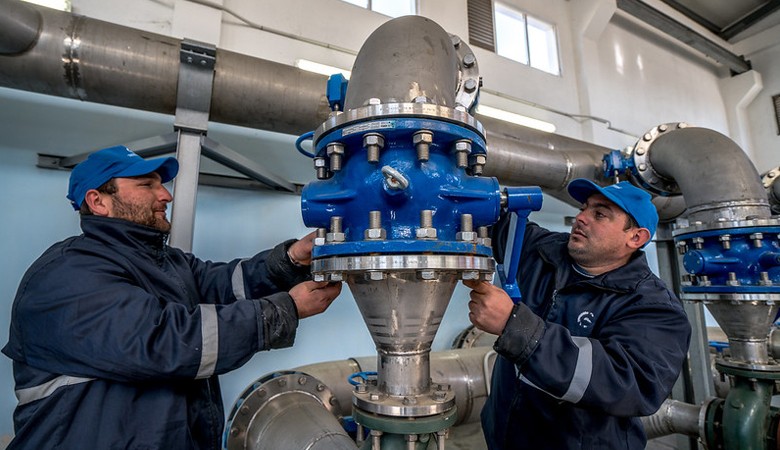
-
Access to Water
93.3 %
-
Access to Sanitation
84.9 %
-
Number of PPPs Reaching FC
----
-
Value of PPPs Reaching FC
----
-
Number of PPPs with Foreign Sponsors
----
-
Number of PPPs with Govt. Support
----
FC = financial closure, Govt. = government, M = million.
Note: Access to water and sanitation as percentage of total population with access to improved water resources and sanitation facilities.
Sources: Asian Development Bank (ADB). Data Library. Cumulative Lending, Grant, and Technical Assistance Commitments. https://data.adb.org/dataset/cumulative-lending-grant-and-technical-assistance-commitments (accessed 25 July 2020); ADB. 2019. Country Partnership Strategy: Georgia, 2019–2023—Developing Caucasus’s Gateway to the World. Manila. https://www.adb.org/sites/default/files/institutional-document/521601/cps-geo-2019-2023.pdf; and The Economist Intelligence Unit. Infrascope 2019: Georgia Country Profile. https://infrascope.eiu.com/.
Water and Wastewater
Contracting Agencies
The Ministry of Regional Development and Infrastructure (MRDI) is empowered to provide Georgia with water and ensure the implementation of measures to promote the introduction and development of water supply systems. MRDI also manages the United Water Supply Company of Georgia LLC, a 100% state-owned enterprise. It serves 48 cities (58% of the cities in the coverage area), of which 28 are provided with 24-hour water supply. Work is underway in the remaining 20 cities.
The Georgian National Energy and Water Supply Regulatory Commission (GNERC) is an independent, economic, and service quality regulator of licensed water supply and water services providers. Licenses are issued to suppliers who demonstrate commercial viability, and only licensed suppliers can claim a tariff. As a result, service providers, including companies in municipalities, depend on subsidies to cover service delivery costs.
Municipalities are mandated to provide effective, efficient, and sustainable water services. They may provide water services or select, procure, and contract suitable providers. However, few municipalities have the financial, technical, or managerial capabilities to fulfill this role. The LEPL National Food Agency of the Ministry of Environmental Protection and Agriculture of Georgia monitors drinking water.
Water and Wastewater
Sector Laws and Regulations
The Law of Georgia on Energy and Water Supply (2019) regulates water supply and creates a legislative framework for the legal connection with water supply.
The Law of Georgia on Water (1997) provides the legislative framework for water and sanitation.1 It ensures the implementation of a unified national policy in water conservation and use. According to Article 39 of the Law of Georgia on Water, the government approves Regulation No. 431 Conditions for Discharging and Receiving Wastewater in the Water (Sewage) System and Marginally Permissible Norms of Polluting Substances. This regulation establishes the procedures and control mechanisms for the discharge and reception of wastewater into the water (sewage) system.2
The Organic Law of Georgia identifies municipal water and wastewater management as the sole responsibility of municipalities and assigns municipalities the functions to invest, regulate, and manage these systems. Meanwhile, the regulatory function in the water supply and sanitation (WSS) sector is implemented by GNERC and the investment function is carried out by MRDI (the following table).3
GNERC continuously monitors the fulfillment of the license conditions of the licensed water supply enterprises through various means, including evaluation of the reporting forms submitted by the licensees to the commission. On 29 July 2021, the commission approved Resolution No. 36 on Rules for Evaluating Investments in the Water Supply Sector, which establishes the basic principles and criteria for developing, submitting, evaluating, agreeing, monitoring, and making changes to investment plans and their component investment projects by water supply licensees.4
- 1Government of Georgia. 1997. Law of Georgia on Water. https://matsne.gov.ge/document/view/33448?publication=27.
- 2Government of Georgia. 2018. Technical regulation No. 431 on Conditions for discharging and receiving wastewater in the water (sewage) system and marginally permissible norms of polluting substances. Tbilisi. https://matsne.gov.ge/ka/document/view/4306275?publication=0.
- 3ADB. 2010. Georgia: Developing an Urban Water Supply and Sanitation Sector Strategy and Regulatory Framework for Georgia. Consultant’s report. (TA 7492-GEO). https://www.adb.org/projects/43556-012/main.
- 4The Georgian National Energy and Water Supply Regulatory Commission. 2021. Resolution No. 36 on Rules for Evaluating Investments in the Water Supply Sector. https://matsne.gov.ge/ka/document/view/5227106?publication=0. Institutes and Schools of Public Administration in Central and Eastern Europe (Myspace). 2015. Municipal Water and Wastewater Sector in Georgia. Status Report. https://www.nispa.org/files/GE-report.pdf; and United Nations Economic Commission for Europe. 2011. United Water Supply Company of Georgia LLC. PowerPoint presentation prepared for the Ministry of Regional Development and Infrastructure of Georgia. 7 November. https://www.unece.org/fileadmin/DAM/env/water/npd/United_water_supply_company_of_Georgia.pdf.
Regulating Agencies
Agency Function Ministry of Regional Development and Infrastructure - Responsible for implementing regional development policy including coordination and support of the development of water supply and sanitation systems
- Coordinate activities of the United Water Company, the largest operator in Georgia’s regions
- Supervise the Municipal Development Fund that provides investment for the construction and rehabilitation of water and wastewater infrastructure in Georgia’s municipalities
Georgian National Energy and Water Supply Regulatory Commission - Set water and wastewater service tariffs and regulate relations between service providers and customers
- Responsible for economic and service quality standard regulation
Sources: Asian Development Bank. 2010. Georgia: Developing an Urban Water Supply and Sanitation Sector Strategy and Regulatory Framework for Georgia. Consultant’s report. (TA 7492-GEO). https://www.adb.org/sites/default/files/project-document/74990/43556-012-geo-tacr-01.pdf; The Network of Institutes and Schools of Public Administration in Central and Eastern Europe (Myspace). 2015. Municipal Water and Wastewater Sector in Georgia. Status Report. https://www.nispa.org/files/GE-report.pdf; and United Nations Economic Commission for Europe. 2011. United Water Supply Company of Georgia LLC. PowerPoint Presentation prepared for the Ministry of Regional Development and Infrastructure of Georgia. November. https://www.unece.org/fileadmin/DAM/env/water/npd/United_water_supply_company_of_Georgia.pdf.
Foreign Investment Restrictions
COMPAREDOWNLOADParameter 2017 2018 2019 2020 2021 2022 2023 Maximum allowed foreign ownership of equity in greenfield projects 100% 100% 100% 100% 100% 100% 100% Note: Foreign ownership is not restricted in Georgia. Only two laws specify that foreign and local investors have equal rights.
Source: Parliament of Georgia. 1997. Civil Code of Georgia. https://matsne.gov.ge/en/document/view/31702?publication=131; Parliament of Georgia. 1995. Constitution of Georgia. https://matsne.gov.ge/en/document/view/30346?publication=36.
Standard Contracts
COMPAREDOWNLOADType of contract Availability PPP/concession agreement Performance-based operation and maintenance contract Engineering, procurement, and construction contract - No
- Unavailable
Source: Asian Development Bank. 2019. Public–Private Partnership Monitor. Second Edition.
https://www.adb.org/publications/public-private-partnership-monitor-2nd-edition.
Water and Wastewater
Sector Master Plan
In 2021, MARDI developed a Water Supply and Sanitation Vision and Policy Statement for the first time.1 It presents the vision for the sustainable future development of the WSS sector in Georgia and addresses three areas:
- All people living in Georgia have access to adequate, standards-based, appropriate, and affordable water and sanitation services, use water wisely, and practice standards-based sanitation.
- Water supply and sanitation services are provided by effective, efficient, and sustainable institutions in each municipality that are accountable and responsive to those whom they serve. Water service institutions reflect Georgia’s gender and cultural diversity.
- Water is used effectively, efficiently, and sustainably to reduce poverty, improve human health, and promote economic development. Water and wastewater are managed in an environmentally responsible and sustainable manner, aiming to restore and protect biodiversity and contribute to climate change adaptation and mitigation to reduce the carbon footprint.
The Vision 2030: Development Strategy of Georgia states that by the end of 2025, the entire population of the cities in the company’s coverage area will have access to 24-hour, standard water supply. As a result, more than 500,000 beneficiaries will have access to international standards of water supply. By 2030, 100% of the country’s population will have access to standards-compliant water.2
The vision and policy statement describes the sector reforms necessary to deliver WSS services that are universal, in compliance with standards of service, efficient, inclusive, and affordable. It outlines the key policy positions that relate to sector issues, including institutional arrangements, service delivery targets, planning, funding, public awareness, and engagement. This policy was based on the EU Water Framework Directive and Directive on Urban Wastewater Treatment, as well as the Georgian legislation with its laws, bylaws, and regulations.
According to the vision and policy statement, MARDI is considering the possibility of private sector participation in water supply and water infrastructure development activities, which will provide consumers with sustainable benefits, including (i) enhanced service delivery, level, and quality; (ii) improved financial viability through improved billing and collection, staff productivity, reduced nonrevenue water, and efficient resource management; (iii) transfer of knowledge and skills; (iv) introduction of technology; and (v) the need for a change agent.
The MARDI will take into account the need to balance private sector expectations of returns against the benefits that the private sector can deliver with the optimum private sector business model, based on the best overall net benefits. This will consider the tools available to provide incentives for improved performance that may not be available or as effective in the public sector.
There are nine water supply licensees operating in the water supply sector (as of 31 December 2022), providing 68% of the population with drinking water, while 32% are provided with water by local self-government units. Of the licensees operating in the water supply sector, one is a state-owned company, five are municipal companies, and three are privately-owned companies.3 The private owned company Georgian Water and Power LLC provides high-quality service to the population of Tbilisi and Mtskheta, as well as to state organizations and industrial and commercial operations. The 100% state-owned United Water Supply Company of Georgia (UWSCG) LLC, which is managed by MARDI, serves 48 cities, 58% of the cities in the coverage area; 28 cities are already provided with 24-hour water suppl, and in the remaining 20, works are underway.
- 1Ministry of Regional Development and Infrastructure of Georgia. 2021. Georgia: Water Supply and Sanitation—Vision and Policy Statement. https://www.mrdi.gov.ge/files/1/%E1%83%A1%E1%83%94%E1%83%A5%E1%83%A2%E1%83%9D%E1%83%A0%E1%83%98%E1%83%A1%20%E1%83%92%E1%83%90%E1%83%9C%E1%83%95%E1%83%98%E1%83%97%E1%83%90%E1%83%A0%E1%83%94%E1%83%91%E1%83%90/Vision%20and%20Policy.pdf.
- 2Government of Georgia. The Vision 2030: Development Strategy of Georgia. https://www.gov.ge/files/428_85680_321942_khedva-2030-saqarthvelos-ganvitharebis-strategia-1.pdf.
- 3Georgian National Energy and Water Supply Regulatory Commission (GNERC). 2023. Activity Report of 2022. https://gnerc.org/files/Annual%20Reports/Reports%20English/2022%20Activity%20Report%20-%20Eng.pdf.
Projects under Preparation and Procurement
There is no available data for the number of PPP projects in Georgia’s water and wastewater sector that are under preparation and procurement.
Water and Wastewater
Features of Past PPP Projects
Procurement of PPP Projects
Water and Wastewater Public-Private Partnerships procured through various modes
The Gardabani Wastewater Treatment Plant and Water Supply Infrastructure Rehabilitation Project was procured as an unsolicited proposal.
COMPAREDOWNLOADNote: Only active and concluded projects are considered. The hyphen means there are no projects in the sector, or data is not available or not applicable, according to the database.
Source: World Bank. Infrastructure Finance, PPPs and Guarantees. Country Snapshots. Georgia. https://ppi.worldbank.org/en/snapshots/country/georgia (accessed 29 April 2024).
PPP Projects Reaching Financial Close
Water and Wastewater Public-Private Partnerships reaching Financial Close
The Gardabani Wastewater Treatment Plant and Water Supply Infrastructure Rehabilitation Project attained financial closure in July 2017 on rehabilitate–operate–transfer mode. The total investment was $25 million.
There is no available data for the number of PPP projects in Georgia’s water and wastewater sector that have received participation from foreign sponsors.
There is no available data for the number of PPP projects in Georgia’s water and wastewater sector that have received government support (viability gap funding mechanism, government guarantees, and availability or performance payment).
COMPAREDOWNLOADPPP = public–private partnership.
Note: Only active and concluded projects are considered.
Source: World Bank. Infrastructure Finance, PPPs and Guarantees. Country Snapshots. Georgia. https://ppi.worldbank.org/en/snapshots/country/georgia (accessed 29 April 2024).
PPP Projects with Foreign Sponsor Participation
There is no available data for the number of PPP projects in Georgia’s water and wastewater sector that have received participation from foreign sponsors.
Government Support to PPP Projects
There is no available data for the number of PPP projects in Georgia’s water and wastewater sector that have received government support (viability gap funding mechanism, government guarantees, and availability or performance payment).
Payment Mechanism for PPP Projects
Payment Mechanisms for Water and Wastewater Public-Private Partnerships
The Gardabani Wastewater Treatment Plant and Water Supply Infrastructure Rehabilitation PPP Project collects user charges.
COMPAREDOWNLOADNote: Only active and concluded projects are considered. The hyphen means there are no projects in the sector, or data is not available or not applicable, according to the database.
Source: World Bank. Infrastructure Finance, PPPs and Guarantees. Country Snapshots. Georgia. https://ppi.worldbank.org/en/snapshots/country/georgia (accessed 29 April 2024).
Typical Risk Allocation for PPP Projects
COMPAREDOWNLOADRisk Type Private Public Shared Demand Revenue collection Tariff Government payment Environment and social Land acquisition Interface Handover Political Foreign exchange (FOREX) - Not Applicable
- *Details on typical Risk allocation are not available for this sector
Financing Details
Consideration Status Public–private partnership (PPP) projects with foreign lending participation UA PPP projects that received export credit agency/international financing institution support 1 Typical debt-to-equity ratio UA Time for financial closure UA - UA = Unavailable
LEARN MOREWater and Wastewater
Features of Past PPP Projects
The European Investment Bank was a lender for the Gardabani Wastewater Treatment Plant and Water Supply Infrastructure Rehabilitation PPP Project.
Source: Asian Development Bank. 2019. Public–Private Partnership Monitor. Second Edition. https://www.adb.org/publications/pu.blic-privatepartnership-monitor-2nd-edition.
Water and Wastewater
Tariffs
The Georgian National Energy and Water Supply Regulatory Commission sets water and wastewater service tariffs. The tariffs are bifurcated in household and non-household tariffs. The household tariffs are further bifurcated into metered and nonmetered tariffs. For some companies, these tariffs are set by the local municipalities.
Water and Wastewater
Challenges
The Water Supply and Sanitation Vision and Policy statement outlines several key challenges in the sector:
- The quality of service and the coverage area of licensed companies in rural areas should be increased. There is a considerable difference among the regions. Many towns and villages are supplied with water on a limited schedule, and the effective delivery of services is put at risk by outdated, out-of-order, and, in some cases, under-construction infrastructure. To provide the same services in rural areas as in cities, it is necessary to rehabilitate and expand the water supply and drainage network and increase the number of licensed companies.
- There is both depreciated and newly created infrastructure in the country, as well as areas where there is no network or infrastructure. Accordingly, depending on the quality of infrastructure development, there is a need for effective management and rehabilitation of physical infrastructure construction. A wide range of measures are needed, including capacity building as well as improved enforcement.
- Discharges of untreated or inadequately treated sewage from water utilities contribute to water pollution, outbreaks of water-related diseases, and harm to ecosystems.
- The existing tariffs for water supply and sanitation services do not cover the operational cost of delivering the services. This is why the government subsidizes the company. Often, the existing tariff leads to excessive water consumption, as well as other water waste, resulting in increased financial losses. Commercial customers pay significantly higher tariffs than household consumers, which can have adverse economic impacts, including increased cost burdens on industry which affects their competitiveness. Due to the high tariff burden, commercial customers may refuse the services of the operator companies, which causes even greater financial damage to those companies and the economy in general.
-
ICT

-
Telephone Subscribers
15.1
-
Cellular Phone Subscribers
136.38
-
Cellular Network Coverage
99.1 %
-
Internet Subscribers
21
-
Internet Bandwidth per User
70.97 kbps
-
Number of PPPs Reaching FC
----
-
Value of PPPs Reaching FC
----
-
Number of PPPs with Foreign Sponsors
----
-
Number of PPPs with Govt. Support
----
FC = financial closure, ICT = information and communication technology, kbps = kilobits per second.
Note: Telephone, cellular phone, and internet subscribers per 100 inhabitants. Cellular network coverage as percentage of population covered.
Sources: The Global Economy. Internet Bandwidth—Country Rankings. https://www.theglobaleconomy.com/rankings/Internet_bandwidth/ (accessed 25 July 2020); The Global Economy. Internet Subscribers per 100 People—Country Rankings. https://www.theglobaleconomy.com/rankings/Internet_subscribers_per_100_people/ (accessed 25 July 2020); The Global Economy. Mobile Network Coverage—Country Rankings. https://www.theglobaleconomy.com/rankings/Mobile_network_coverage/ (accessed 25 July 2020); The Global Economy. Mobile Phone Subscribers per 100 People—Country Rankings. https://www.theglobaleconomy.com/rankings/Mobile_phone_subscribers_per_100_people/ (accessed 25 July 2020); and World Bank. Mobile Cellular Subscriptions (per 100 people). https://data.worldbank.org/indicator/IT.CEL.SETS.P2?end=2018&locations=MM-KH-UZ-CN-BD-GE-IN-ID-KZPK-PH-LK-TH-VN&start=2018&view=bar (accessed 25 July 2020).
ICT
Contracting Agencies
The Ministry of Economy and Sustainable Development governs Georgia’s information and communication technology (ICT) sector. The ministry’s Department of Communications, Information and Modern Technologies is responsible for ICT development and management. The MOESD, together with the Georgian National Communications Commission (GNCC) is a high-level coordination body that coordinates legislation and regulates the ICT sector in the country.1
- 1Eastern European and Central Asian. ICT Environment, Innovation Policies & International Cooperation. Georgia. https://eeca-ict.eu/images/uploads/pdf/EECA_counires_reports_NEW/ICT-Env_Inno-policies_and_Inter-coop_report_GEORGIA.pdf.
ICT
Sector Laws and Regulations
The Law of Georgia on Electronic Communications establishes (i) the legal and economic framework for activities carried out through electronic communication networks and associated facilities, (ii) the principles for creating and regulating a competitive environment in this field, (iii) the functions of the national regulatory authority (the GNCC), and (iv) the rights and obligations of natural and legal persons in the process of possessing or using electronic communication networks and facilities, or when providing services via such networks and facilities.1 The following table describes the functions of agencies that regulate Georgia’s ICT sector.
- 1Government of Georgia. 2013. Law of Georgia on Electronic Communications. https://matsne.gov.ge/en/document/download/29620/26/en/pdf.
Regulating Agencies
Agency Roles/Responsibilities Ministry of Economy and Sustainable Development - Responsible for policy development in the field of information and communication technology
Department of Communications, Information and Modern Technologies - Participate in the elaboration and implementation of state policy directions within the competence of electronic communications, information technologies, post, and scientific and technological innovations
- Promote export-oriented, scientific, and technological innovation and information technology products and commercialization of scientific and technological products; determine basic state policy directions, mid-term and long-term strategies, and priorities; and elaborate, implement, and monitor the programs
- Elaborate on development and improvement strategies, programs for electronic communications, information technologies, post, scientific and technological innovation; partake in its implementation according to the legislation; elaborate short-, medium-, and long-term development strategies of an appropriate normative basis for e-services, e-commerce, and Internet content, among others
- Elaborate concept, strategic plan, and program of e-government to improve state governance through innovations and information and telecommunication technologies development
- Participate in the elaboration of cyber and information security policy and monitoring
- Conduct technical and economic analysis of electronic communications, information technologies and post, scientific and technological innovations, and predictions of their further development
- Engage in international cooperation in communications, modern information technologies, and innovations.
Georgian National Communications Commission - Issue authorization for activities in the field of electronic communications
- Establish transparent and nondiscriminatory rules and conditions for obtaining the right to use a radio frequency spectrum and/or numbering resources; issue and revoke licenses and permits for using exhaustible resources
- Impose specific obligations under the Law of Georgia on Electronic Communications and monitor and supervise their execution to ensure competition
- Supervise compliance with the conditions of authorization of activities in the field of electronic communications; monitor the performance of license and/or permit conditions and, in case of non-compliance, implement measures prescribed by law
- Define procedures for establishing amateur radio communications and for using amateur radio stations
- Represent Georgia in international organizations operating in the field of electronic communications and protect its interests within its powers and the scope of authority delegated by the Government of Georgia
Sources: Government of Georgia. 2013. Law of Georgia on Electronic Communications. https://matsne.gov.ge/en/document/download/29620/26/en/pdf; and Ministry of Economy and Sustainable Development of Georgia. Economic Policy. http://www.economy.ge/?page=ecopolitic&s=25.
Foreign Investment Restrictions
COMPAREDOWNLOADParameter 2017 2018 2019 2020 2021 2022 2023 Maximum allowed foreign ownership of equity in greenfield projects 100% 100% 100% 100% 100% 100% 100% Note: Foreign ownership is not restricted in Georgia. Only two laws specify that foreign and local investors have equal rights.
Source: Parliament of Georgia. 1997. Civil Code of Georgia. https://matsne.gov.ge/en/document/view/31702?publication=131; Parliament of Georgia. 1995. Constitution of Georgia. https://matsne.gov.ge/en/document/view/30346?publication=36.
Standard Contracts
COMPAREDOWNLOADType of contract Availability PPP/concession agreement Performance-based operation and maintenance contract Engineering, procurement, and construction contract - No
- Unavailable
Source: Asian Development Bank. 2019. Public–Private Partnership Monitor. Second Edition. https://www.adb.org/sites/default/files/publication/509426/ppp-monitor-second-edition.pdf.
ICT
Sector Master Plan
In 2020, the government developed and adopted the Economic Development Strategy of Georgia (Vision 2030). The strategy’s vision for national development in terms of the digital economy and information technology entails one crucial goal for the development of the ICT sector in Georgia—the development of the digital economy and information society.
Georgia aspires to become a digital hub with global connectivity, human capital development, an increase in economic competitiveness and inclusion of more people and companies in the global digital economy. Achieving this goal requires broadband internet connection and hiqh-quality infrastructure. Further investment attraction and legal, regulatory, and institutional framework-related reforms should be carried out to facilitate achieving the country’s strategic goal. To achieve the goal, the strategy identifies two crucial tasks: (i) the development of high-speed internet infrastructure, and (ii) the development of a digital market and using Georgia’s transit potential.
Under the Log-in Georgia project, high-speed broadband infrastructure development will be continued. The legislative framework will be improved for the development of broadband networks and services, attracting sector investments, and developing 5G networks. The project’s aim is to increase access to high-speed broadband connectivity for populations in rural areas, promote the use of digitally enabled services (including digital public services) among connected populations, and improve the affordability of services across the country.
Activities will be planned to provide internet access to the mountainous regions to promote community internalization. As a result, the private sector will be promoted to make more investments in digitalization in various areas of the sector.
In terms of the development of a digital market and using Georgia’s transit potential, the strategy entails using the telecommunication broadband infrastructure; transit potential will be reached through the establishment of a digital hub connecting Europe and Asia; with an increase in the number of optical-fiber highways in the Black Sea connecting Europe and Asia and by creating an attractive environment for establishing large data centers (e.g., Google, Facebook, Amazon, Microsoft). For the successful formation of a digital transit corridor between Central Asia and Europe, the Trans Caspian underwater connection plays a crucial role. Commissioning the underwater connection will contribute to the development of global internet connection and increase the potential to become a digital hub.
Georgia’s integration within the unified European digital market will be a key priority for further development of the digital economy and the ICT sector. In this regard, the international roaming tariff reduction measures will take place with the Eastern Partnership countries along with the e-commerce platform development activities with the EU countries.
Starting in 2020, the Georgian government approved the decree regarding the taxation of international IT companies operating in Georgia. According to the rule, after receiving the status of international company in the IT sector, the income tax rate is five percent (lower than the standard taxation rates applicable for companies operating in Georgia), dividends issued by an international company are not taxed at the source, and are not included in the gross income of the person receiving the dividend and international companies are exempt from property tax (except land tax) if this property us intended to carry out activities permitted by the government decree.
In 2020, the Georgian ICT cluster was formed. Since then, the cluster members have represented leading ICT companies providing solutions based on cyber-physical technologies for e-governance and public administration, the financial industry, transport and logistics, education and knowledge management, science and culture, healthcare and social security, agriculture, and construction. It is a collaborative platform for ICT industry stakeholders that support the establishment of business linkages locally and internationally to increase the competitiveness of the Georgian ICT industry and ultimately contribute to the country’s economic development. The aim is to use a holistic approach to the development of the ICT industry and define our activities within three key directions: Business Development and Export, Policy and Regulation, and Skills and Education.1
- 1Georgian ICT Cluster. About Us. https://ictcluster.ge/en/about-us/.
Projects under Preparation and Procurement
There is no available data for the number of PPP projects in Georgia’s ICT sector that are being prepared and procured.
ICT
Features of Past PPP Projects
Procurement of PPP Projects
ICT Public-Private Partnerships procured through various modes
The Megacom Project (1995) and the GT Mobile Project (merged with Geoceland) were procured through unsolicited bids.
COMPAREDOWNLOADICT = information and communication technology, PPP = public–private partnership.
Note: Only active and concluded projects are considered. The hyphen means there are no projects in the sector, and data is not available or applicable, according to the database.
Source: World Bank. Infrastructure Finance, PPPs and Guarantees. Country Snapshots. Georgia. https://ppi.worldbank.org/en/snapshots/country/georgia (accessed 29 April 2024).
PPP Projects Reaching Financial Close
ICT Public-Private Partnerships reaching Financial Close
The Megacom Project attained financial closure in November 1995 with a total investment of $10 million while the GT Mobile Project attained financial closure in January 2000 (footnote 44). The Tusheti Community Network Project attained financial closure in 2017 with a total investment of around $40,000. 1
- 1Internet Society. 2018. Connecting Tusheti. Impact of Community Networking in Europe’s Highest Settlements. https://www.internetsociety.org/wp-content/uploads/2018/12/2018-Connecting-Tusheti.pdf; and Internet Society. 2017. Tusheti Case Study: Clearing a Path to the Outside World. https://www.internetsociety.org/wp-content/uploads/2017/10/TushetiCaseStudy_201701006_FInal.pdf.
COMPAREDOWNLOADICT = information and communication technology, public–private partnership.
Note: Only active and concluded projects are considered.
Source: World Bank. Infrastructure Finance, PPPs and Guarantees. Country Snapshots. Georgia. https://ppi.worldbank.org/en/snapshots/country/georgia (accessed 29 April 2024).
PPP Projects with Foreign Sponsor Participation
ICT Public-Private Partnerships with Foreign Sponsor Participation
The respective sponsors of the projects are the Megacom: GMC Group (Georgia) and GT Mobile (merged with Geocell): TeliaSonera (Sweden) and Cukurova Group (Türkiye).
COMPAREDOWNLOADICT = information and communication technology, PPP = public–private partnership.
Note: Only active and concluded projects are considered.
Source: World Bank. Infrastructure Finance, PPPs, and Guarantees. Country Snapshots. Georgia. https://ppi.worldbank.org/en/snapshots/country/georgia (accessed 29 April 2024).
Government Support to PPP Projects
There is no available data for the number of PPP projects in Georgia’s ICT sector that have received government support (viability gap funding mechanism, government guarantees, and availability or performance payment).
Payment Mechanism for PPP Projects
There is no available data for the number of PPP projects in Georgia’s ICT sector that have received payment in the form of user charges and government pay (offtake).
LEARN MOREICT
Features of Past PPP Projects
The payment mechanism for the Tusheti Community Network Project is user pay.
There are three main mobile operators in Georgia: Silknet, Magti, and Beeline. Silknet is the mobile communication distributor and most popular network. In the context of maintaining a leading position in fixed internet and pay TV services, in 2018, Silknet became a full-fledged convergent operator due to the strategic acquisition of Geocell, the second-largest mobile service provider in the market. The merger of two powerful brands has created the first convergent product—Silk Plus—which unified mobile and fixed services into one service. The value of the transaction amounted to $153 million.
Typical Risk Allocation for PPP Projects
COMPAREDOWNLOADRisk Type Private Public Shared Demand Revenue Collection Tariff Government Payment Environment and Social Land Acquisition Interface Handover Political Foreign Exchange (FOREX) - Not Applicable
- *Details on typical Risk allocation are not available for this sector
Financing Details
Parameter 2023 Public–private partnership (PPP) projects with foreign lending participation UA PPP projects that received export credit agency/international financing institution support UA Typical debt-to-equity ratio UA Time for financial closure UA - UA = Unavailable
ICT
Tariffs
The Georgian National Communications Commission (GNCC) or any authorized person of the GNCC is responsible for setting and regulating tariffs in the ICT sector. The commission is entitled to establish tariff floors and caps on any type of telecommunications and post when it considers the service market to be noncompetitive. It is also entitled to annul the tariff floors and caps when it considers that a competitive environment has already been established and it will stipulate a just and reasonable tariff to be established.
The GNCC Annual Report 2022 provides an overview of the telecom industry and focuses on removing barriers to entry to mobile and fixed markets.1 Several considerations necessitated an analysis of the mobile and fixed communications markets, including the present market structure and the lack of competitive retail service offerings. Two important telecom operator mergers have occurred in the past few years: Magticom’s purchase of the retail segment of the largest internet provider, Caucasus Online, and the fixed network operator Silknet’s purchase of Geocell. This resulted in the formation of two large operators with strong market dominance in both the mobile and fixed internet markets.
To provide innovative services to users and promote modern radio frequency systems, the Communications Commission updated the National Frequency Plan for Allocation of Radio Frequency Spectrum, which will promote the introduction of modern electronic communication services and the effective use and management of limited resources. The updated plan includes allocating new frequency bands for new technologies, including developing 5G networks. Also, additional frequency bands have been provided for the operation of Fixed Wireless Access and WiFi networks. For specific satellite services, bands were defined and technological standards and types of services were specified.
In 2022, within the framework of the state internalization program, Log-in Georgia, which is being implemented with cofinancing from the World Bank and the European Investment Bank, several important measures were implemented with the active participation of the Communications Commission.
In 2022, the number of mobile service subscribers in Georgia exceeded 5.8 million and the penetration rate among the population increased from 160% to 170%. The record high rate observed in the last 5 years indicates that one user, on average, has more than one mobile number and uses different operators to get the desired mobile service offerings. In 2022, compared to the previous year, the number of mobile subscribers increased and reached 5.84 million by the end of the year.
According to 2022 data, the average revenue received from one subscriber during the month (excluding VAT) amounted to GEL11.814 (2018: 8.3, 2019: 8.6, 2020: 8.6, 2021: 9.7). A comparison of the average revenue per user rate to the average rate of inflation indicates that in the last 5 years, especially in 2020 and 2021, the average revenue received from subscribers fell behind inflation rates, though in 2022 it is ahead of it, which means that the average revenue per user increase in 2022 is out of line with the possible impact of price increases caused by inflation.
The number of mobile internet users is growing every year. From 2018 to 2022, the compound annual growth rate of the number of mobile internet users was 8.6%. The market penetration rate of mobile internet users in relation to the population is even higher and reached 119% at the end of 2022.
The Global Innovation Index takes into consideration a wide range of parameters and assesses and ranks the innovation capability of economies worldwide. Using more than 80 indicators, the index measures innovation inputs and outputs. For this index, Georgia ranked 74th out of 132 economies in 2022, loosing 11 positions from 2021 when the country ranked 63rd.2
- 1Communications Commission. 2022 Annual Report. https://comcom.ge/uploads/other/11/11972.pdf.
- 2PMCG. 2023. Information and Communications Technology Sector in Georgia. 3 April. https://pmcg-i.com/publication/information-and-communications-technology-sector-in-georgia/.
ICT
Challenges
One of the preconditions for achieving digital transformation is focusing on broadband development. It is one of the enablers for businesses, consumers, and citizens. Access to robust ICT infrastructure (fixed, mobile, wireless, satellite) creates a pathway toward sustainable development, enabling innovative services and economic activity.
Georgia’s indicators related to ICT access and infrastructure (access to computer-use, mobile phoneuse, and internet) are generally above the world average. However, there are considerable differences in access among populations in urban and rural areas.
Georgia ranks higher on a number of digital infrastructure rankings and indexes when compared to the world averages and in certain cases to similar income group countries. However, considerable work remains to improve digital infrastructure in line with the achievements of Europe and other countries in the region.
Despite the good internet coverage, the quality of the internet remains a challenge. The share of internet users in Georgia is above the world average, however, it remains lower than European indicators.
Furthermore, internet prices are higher than in Europe, which affects the share of the population without internet access. The quality and price of the internet are the largest barriers for the population to increase their internet use.
Weak competitiveness of the private sector as well as the weak development of human capital remains a challenge in the sector, despite the trend of increased competition. Georgia has made progress toward achieving universal and meaningful digital connectivity, with notable improvements in indicators of ICT accessibility and affordability. However, importantly, the country lags in terms of ICT skills development.
While the ICT sector in Georgia has shown substantial growth in recent years, Georgia’s position has dropped in some international rankings, in particular those measuring a country’s capability to produce innovative outputs (Global Innovation Index), its readiness to adopt frontier technologies (Frontier Technologies Readiness Index) and, critically, its capability to use ICT to increase the country’s competitiveness and overall well-being (Network Readiness Index).
According to the country’s strategic document (Vision 2030), ICT sector development is regarded as one of the cornerstones of Georgia’s social and economic development, hence its efficient integration into the global economy is of great importance.
-
Social Infrastructure
Contracting Agencies
The following institutions are responsible for implementing projects in the social infrastructure:
Education sector
- Ministry of Education and Science and Youth of Georgia
- Education and Science Infrastructure Development Agency1
- Skills Agency
Healthcare sector
- Ministry of Internally Displaced Persons from the Occupied Territories, Health, Labor and Social Affairs of Georgia2
Housing Sector
- Spatial and Urban Development Agency under the Ministry of Economic and Sustainable Development of Georgia3
- 1Government of Georgia. 2010. Law of Georgia on General Education. https://matsne.gov.ge/en/document/download/29248/56/ en/pdf.
- 2Government of Georgia. 1997. Law of Georgia on Health Care. https://www.ilo.org/dyn/natlex/docs/ELECTRONIC/88317/118650 /F-928788116/GEO88317%20Geo.pdf
- 3World Bank. 2015. Georgia Urban Strategy-Priority Area III: Housing. Final Report. http://documents1.worldbank.org/curated/ en/422631533128729643/pdf/129128-31-7-2018-13-49-20-GeorgiaHousingFinalFINALComponent.pdf.
Social Infrastructure
Sector Laws and Regulations
Education Sector Regulations
The Law on General Education provides the regulatory framework for the education sector. It regulates the conditions for educational activities and the principles and procedures for managing and funding general education. The law also defines the status of all general education institutions (irrespective of their organizational and legal form), and rules for their establishment, functioning, reorganization, liquidation, authorization, and accreditation. It also defines the conditions and procedures for teaching in general education institutions. The table below describes the functions of agencies that regulate the education sector in Georgia.
Regulating Agencies in the Education Sector
Agency Function Parliament of Georgia Determine the state policy and basic focus areas of management and develop legislative acts in the field of general education
Periodically hear reports from the Minister of Education and Science on the implementation of state policy and financial activities and fulfillment of national and regional programs in the field of education
Government of Georgia Implement the state policy in the field of education
Approve the fiscal standards and amounts of standard and increased school vouchers per pupil on the proposal of the Ministry of Education and Science, the Ministry of Economy and Sustainable Development, and the Ministry of Finance
Ministry of Education and Science Implement a unified state policy in the field of general education
Develop the National Goals for General Education and submits it to the government
Develop and approves the statutes of the Legal Entities under Public Law (LEPL) National Center for Teacher Professional Development, the LEPL Office of the Resource Officers of Educational Institutions, the LEPL Education and Science Infrastructure Development Agency, and the LEPL Education Management Information System
Develop and approve the National Curriculum, and facilitates its implementation and piloting
Conduct research to facilitate education development
Approve the provisions and fees for authorization of educational institutions and accreditation of educational programs for educational institutions
Determine construction standards for the premises of general education institutions in coordination with appropriate ministries and agencies
Establish the LEPL National Center for Educational Quality Enhancement to organize authorization and accreditation of educational institutions, including general education institutions
Establish the LEPL Education and Science Infrastructure Development Agency, LEPL Education Management Information System, and LEPL/LEPLs National Center (for teacher professional development)
Education and Science Infrastructure Development Agency Rehabilitate, build, and supply inventory and equipment to education and scientific institutions within the Ministry of Education and Science
Exercises other powers determined by the statute of the LEPL Education and Science Infrastructure Development Agency
Skills agency Facilitate the introduction of vocational programs in the labor market
Support innovative training
Improve competition and provides better employment opportunities
Source: Government of Georgia. 2010. Law of Georgia on General Education. https://matsne.gov.ge/en/document/download/29248/56/en/pdf.
The Vocational Skills Agency was jointly established by the Ministry of Education and Science and the Chamber of Commerce and Industry and will facilitate the introduction of vocational programs in the labor market, support innovative training, improve competition and provide better employment opportunities. The agency lays a solid foundation for PPPs and human capital development in the country.
Health-Care Sector Regulations
The Law of Georgia on Healthcare regulates the relations between state authorities and the citizens. The law has the following principles:
- Compliance of the healthcare system with the economic development strategy of the country and ensuring the system’s manageability;
- Cooperation with international healthcare organizations;
- Program-based and targeted program-based healthcare state financing; autonomy of the financial, economic, and contractual relations and the management system to ensure self-financing and self-governance of healthcare institutions of the state sector as provided for by legislation;
- State financing of biomedical and healthcare research according to existing resources and the creation of favorable conditions to attract financial resources from the private sector.
- Prioritization of primary healthcare, including emergency medical care, participation of the state and private sectors, development of the Institute of Family Medicine and Family Doctor and provision of access to medical services based on it; and
- Participation of professional associations, as well as other nongovernment organizations in the formation of a modern, effective system of healthcare through consultations, scientific and professional discussions, development of appropriate projects, participation in the protection of patient rights.
The below table describes the functions of agencies regulating Georgia’s healthcare sector.
Regulating Agencies in the Healthcare Sector
Agency Function Ministry of Labor, Health and Social Affairs Ensure the pursuit of the state’s healthcare policy
Develop and issue respective legal acts on matters within the scope of its authority unless otherwise determined by the legislation
Certify the respective right to carry out medical treatments (a license and/or a permit)
Exercise quality assurance of medical treatments in all medical institutions as provided for by legislation
Develop legislation and the procedures of organizational-legal arrangements necessary for developing the system of primary healthcare
Source: Government of Georgia. 1997. Law of Georgia on Healthcare. https://www.ilo.org/dyn/natlex/docs/ELECTRONIC/88317/118650/F928788116/GEO88317%20Geo.pdf.
Social Housing Sector Regulations
The legal and regulatory framework for the housing sector remains underdeveloped. The Constitution, the Civil Code of Georgia, and a few other laws address housing sector components; however, there is neither specifically targeted legislation nor legally adopted guidelines to regulate activities in the housing sector. In 2018, the government (Spatial and Urban Development Agency under the Ministry of Economy and Sustainable Development) embarked on the preparation of new construction norms and rules in line with international standards (in particular European standards).
According to the amendments to the Spatial Planning, Architecture, and Construction Code, the functions of the Ministry of Regional Development and Infrastructure in the field of spatial and urban development will be transferred to the LEPL Spatial and Urban Development Agency under the Ministry of Economy and Sustainable Development. The Spatial and Urban Development Agency was created in 2022 to coordinate the country’s spatial and urban development policy. The below table describes the agency’s functions regulating the social housing sector in Georgia.
Regulating Agency in the Social Housing Sector
Agency Function Spatial and Urban Development Agency Produce and implement the National Spatial Development Plan of Georgia
Assist local municipalities in coordinating their land-use master plans
Harmonize current legislation with the OECD best practices
Increase awareness about the benefits and necessity of Spatial Urban planning and its effect on climate change and sustainable development
Strengthen cooperation between state, academic, and private agencies around spatial and urban planning
OECD = Organisation for Economic Co-operation and Development.
Source: World Bank. 2015. Georgia Urban Strategy—Priority Area III: Housing. Final Report. http://documents1.worldbank.org/curated/en/422631533128729643/pdf/129128-31-7-2018-13-49-20-GeorgiaHousingFinalFINotApplicalbeLComponent.pdf.
Foreign Investment Restrictions
COMPAREDOWNLOADParameter 2017 2018 2019 2020 2021 2022 2023 Maximum allowed foreign ownership of equity in greenfield projects 100% 100% 100% 100% 100% 100% 100% Note: Foreign ownership is not restricted in Georgia. Only two laws specify that foreign and local investors have equal rights.
Source: Parliament of Georgia. 1997. Civil Code of Georgia. https://matsne.gov.ge/en/document/view/31702?publication=131; Parliament of Georgia. 1995. Constitution of Georgia. https://matsne.gov.ge/en/document/view/30346?publication=36.
Standard Contracts
COMPAREDOWNLOADType of Contract Availability What standardized contracts are available and used in the market? PPP/concession agreement
Performance-based operation and maintenance contract
Engineering procurement and construction contract
- No
- Unavailable
Source: Asian Development Bank. 2019. Public–Private Partnership Monitor. Second Edition. https://www.adb.org/sites/default/files/publication/509426/ppp-monitor-second-edition.pdf.
Social Infrastructure
Sector Master Plan
Education Sector
The Ministry of Education and Science and Youth developed the Unified Strategy for Education and Science, 2022–2030.1 It directs the country’s education system to provide high-quality education for all. The ministry defines the basic priorities and long-term goals in education and science development 2022–2030.2 In accordance with the strategy’s vision, in 2030, the high quality of education and science system will allow individuals to make the best choices for developing their competencies and abilities.
This will contribute to the development of the labor force corresponding to the needs of the market and will enable individuals to fulfill their interests and abilities. The strategy was developed with a systematic approach and is in full compliance with national legislation, European best practices in the field of education, and the relevant recommendations. It stipulates the political vision of the future of Georgia, which is based on the aspiration to build a European state. The Law on Vocational Education adopted by the Parliament in 2018 put the need for important interventions on the agenda; however, the mid-term and final evaluation of the 2017–2021 strategy conducted by the Ministry of Education and Science in 2019 and early 2022 revealed that the strategic goals and objectives were not clearly formulated and supported by relevant indicators.
Based on the analysis of the achievements and challenges of education and science, research, technology, and innovation systems, the government defined priorities to improve the quality and relevance of education, equity, inclusion, and diversity, as well as governance, financing, and accountability systems. The reforms and initiatives to be implemented in the system in 2022–2030 are based on these priorities. Sectoral priorities are as follows:
- Quality and relevance
- Goal 1.1: Ensuring high-quality, supportive, and development-oriented care and the educational process by all early childhood and preschool care and education institutions
- Goal 1.2: Providing an accessible learning process for each student in general educational institutions, focused on high attainable results and students’ holistic development
- Goal 1.3: Development of an innovative and flexible vocational education system focused on the needs of society and the economy
- Goal 1.4: Personal development and preparation for the labor market of each student by the higher educational institution
- Goal 1.5: Development of a knowledge-based society and an economy-oriented science, research, technology, and innovation system
- Equality, inclusion, and diversity
- Goal 2.1: Promoting the participation of disadvantaged children in early education and school readiness programs
- Goal 2.2: Creating equal opportunities for learning and development for every student at all levels of general education
- Goal 2.3: Providing access to diverse, inclusive, and individual needs-oriented vocational education
- Goal 2.4: Ensuring equal access and success opportunities in quality and inclusive higher education
- Goal 2.5: Supporting public engagement in the creation of inclusive and diverse science, research, technology, and innovation
- Governance, financing, and accountability
- Goal 3.1: Strengthening the effectiveness and sustainability of the early and preschool education system
- Goal 3.2: Improving the effectiveness and sustainability of the management of the general educational institution
- Goal 3.3: Enhancing the efficiency of the vocational education system
- Goal 3.4: Support for sustainable development of higher educational institutions
- Goal 3.5: Improving the efficiency of research, science, technology, and innovation systems
Mechanisms will be created at all levels of the educational system to improve the quality of teaching and attract successful teachers, trainers, and education specialists to the profession for their continuous professional development and career growth. Significant reforms to the quality of teaching will be implemented in educators’, teachers’, and education specialists’ training, entry into the profession, and continuous professional development. It includes the development of performance evaluation, career development planning, and incentive systems. A continuous professional development system for teachers will be established at the school base, where teachers will be involved in continuous needs-based professional development.
High-quality, modern, and diverse learning and teaching resources, including textbooks, supplementary materials, and digital resources, will be available to teachers at all levels of education.
Educational and scientific infrastructure will be improved. Despite recent large-scale construction and rehabilitation, challenges remain concerning infrastructure and the physical environment at all levels of education, research, and innovation. Many children in preschool education are deprived of the appropriate physical environment necessary for development. In the case of general education institutions, schools that particularly need to solve problems related to the physical environment and infrastructure will be selected at the initial stage. Through cooperation with municipalities, civil society and communities will find effective ways to improve the quality of education delivery. Considering the current needs, one of the ways to solve the issues can be merging educational institutions of different levels into one space.
Cooperation between educational institutions and stakeholders, including parents, employers, and civil society representatives, will be strengthened. One of the priority areas will be the promotion of lifelong competencies such as literacy, multilingualism, quantitative literacy, financial literacy, scientific and engineering skills, digital and technology-based competencies, interpersonal skills and active citizenship, entrepreneurship, intercultural sensitivity, and expression.
Following the emergence of new economic sectors, entrepreneurship education and promotion among young people will be strengthened. In Georgia, children and young people are interested in entrepreneurship, but institutions need to promote entrepreneurship education and methodical support. In cooperation with donors and stakeholders, the government will promote the development of creative and entrepreneurial skills in educators and students. This component will also be strengthened in adult education programs. Business linkages of academic and scientific staff will be supported, and intellectual property rights will be protected.
Within the memorandum of cooperation established between the ministry and mobile operators, students and teachers of public and private schools enjoyed discounted mobile internet packages. Within the vocational education reform framework, the national qualification framework, which is similar to the European example, was approved. Structural and substantive links between vocational education and other levels of education were established. The so-called ‘educational deadlock’ was eliminated. The general education components were integrated into vocational education programs.
In February 2020, new standards for vocational educational institutions were approved, and significant changes to the regulations of educational institutions’ authorization standards came into force. A new vocational education management model was developed, based on which, in 2021, the Georgian Chamber of Commerce and Industry and the Ministry of Education and Science of Georgia jointly established the nongovernmental, noncommercial legal entity Skills Agency.
The main principles guiding vocational education management and development processes are co-participation, acceleration of the country’s human capital development through joint efforts, and sharing responsibilities between the public and private sectors. Despite the effort, PPPs in the vocational education sector are still fragmented. The Law on Vocational Education envisages increasing the involvement of the private sector and municipalities, consulting with private sector stakeholders in defining or implementing policies.
Vocational education aims to develop an effective vocational education system through PPPs, strengthening accountability, and mobilizing resources. To strengthen PPPs and cooperation, work will continue through the Skills Agency, which brings together the public sector, employers’ organizations, and more than forty industry organizations. Vocational education funding will be based on a diversified funding model, as the increase in the scale of vocational education requires more financial and human resources and more effective budget management. Since autonomy is related to financial autonomy, the new Law on Vocational Education envisages the inclusion of vocational educational institutions in economic activity. The budget will increase through active private sector involvement, performance-based financing mechanisms, social vouchers, and other instruments. Vocational educational institutions founded by the state or with its participation will also be able to develop economic activities through the provision of products and services and use these revenues to develop the institution for educational purposes.
To ensure participatory management mechanisms in the vocational education policy process, the Skills Agency will contribute to developing a flexible skills ecosystem, where the leading role in creating sectoral policies will be assigned to the private sector. The agency will perform its functions through sectoral skills organizations. To implement an innovative management model, the agency will stimulate professional associations from various sectors to unite for better cooperation to achieve a common goal.
- 1Ministry of Education and Science of Georgia. 2022. The Unified National Strategy of Education and Science of Georgia for 2022–2030. https://sdgs.un.org/partnerships/unified-national-strategy-education-and-science-georgia-2022-2030#:~:text=The%20 Unified%20National%20Strategy%20of%20Education%20and%20Science%20for%202022,equitable%20access%20to%20 inclusive%20and
- 2Ministry of Education, Science, Culture and Sport of Georgia. 2017. Unified Strategy of Education and Science for 2017–2021. Tbilisi. https://planipolis.iiep.unesco.org/sites/default/files/ressources/georgia_unified_strategy_of_education_and_ science_2017-2021_0.pdf.
Healthcare Sector
The 2014–2020 State Concept of the Healthcare System represents a vision for developing the healthcare system. It integrates the fundamentals of the development of the healthcare sector to reflect internationally and nationally recognized principles and values. The strategy covered the main aspects of actions and reforms to be implemented with respect to fundamental characteristics of the healthcare sector, aiming to prevent and control priority diseases effectively. In 2022, the government approved the National 2022–2030 Health Protection Strategy.3
The strategy (2014–2020 State Concept of the Healthcare System) was focused on the legal framework and policy reforms, constitutional amendments, and legislative updates on the prohibition of discrimination, juvenile justice, labor safety, and protection of childs’ rights and migrants. After the expiration of the former strategy, the development of a new strategy has been started. The new strategy is built on the previous strategy. However, based on the challenges and experience in this sector, the main focus of the new strategy is the further development of protection of human rights and strengthening the enforcement mechanisms of the system.
The National Health Protection Strategy includes four priority directions:4
- Principles of justice, rule of law, strengthening institutional democracy, effective use of civil and political rights
- Strengthening the protection of economic and social rights and improvement of system guarantees
- Reflecting the constitutional guarantees of equality in the state policy, their implementation in practice, and enjoying human rights freedom without discriminative practice
- Protection of illegally displaced persons and refugees’ rights and freedom of occupied territories of Georgia by the Russian Federation
The Healthcare and Social Issues Committee approved the 2024 action plan reflecting the lawmaking, oversight, organizational and public communication activities, respective terms, and measures. The committee aims to facilitate public healthcare, labor, employment, protection of mothers and children, family development, support of older citizens, internally displaced persons, veterans, and persons with disabilities.
In February 2024, the committee is focused on realizing the healthcare strategy. The fulfillment of the Association Agreement commitments remains a key direction. The national legislation on health and social protection will be aligned with six legal acts of the EU. The plan for 2024 includes four strategic tasks and 41 activities: legislative activity based on the evidence in the direction of healthcare and social protection policy, effective oversight of the implementation of the sector policy, effective representative activity, and the efficiency of the committee. The action plan for 2024 is not yet available.
With the expansion of the state’s universal healthcare program from 2012 to 2022, out-of-pocket costs in total healthcare expenditure decreased from 65% (2013) to 43% (2022). Additionally, the share of private health insurance in total expenditure decreased from 14% to 7%.5
The largest share of government healthcare expenditure (on average 57%) is allocated to the universal health insurance program. The following future perspectives of the healthcare sector were identified during the overview of the healthcare sector (2022):
- Hospital mergers: market competition and recent or planned regulations present opportunities for consolidation. Through the consolidation of resources and services, hospitals can achieve cost reduction and enhance operational efficiency
- Partnerships with universities: collaborating with universities through equity participation enables clinics to access skilled workforce and explore development prospects while simultaneously providing students with practical experience and opportunities
- Development of medical tourism: Georgia has the potential to foster medical tourism and attract patients from neighboring countries (e.g., Armenia, Azerbaijan), Central Asia (e.g., Kazakhstan, Uzbekistan), and the Persian Gulf countries
In 2022, private loans (with a duration of more than 10 years) issued by commercial banks to legal entities doubled compared to the previous year, indicating increased investment in the healthcare sector. Foreign direct investment is generally low, averaging around 1%–1.2% of the total direct investment in the country.
- 3Government of Georgia. 2022. Resolution No. 2030. On the Approval of the National Health Protection Strategy of Georgia for 2022-2030. Tbilisi. https://matsne.gov.ge/ka/document/view/5453716?publication=0.
- 4Parliament of Georgia. 2017. Vision for Developing the Healthcare System in Georgia by 2030. https://web-api.parliament.ge/ storage/files/shares/Komitetebi/jandacva/jand-sist-2030/Health-Strategy-2030-eng.pdf.
- 5TBC Capital. 2023. Overview of Healthcare Sector in Georgia. https://tbccapital.ge/static/file/202307072806-healthcare-eng.pdf.
Social Housing Sector
The social housing sector is underdeveloped in Georgia and does not have a sector-level master plan.
Georgia’s Spatial and Urban Development Agency was created in 2022 to coordinate national spatial and urban policy.6 Less than 20% of the territory is covered by spatial plans. The main goal of the agency is to create a national plan and help regional municipalities create land-use master plans and/or more detailed plans.
- 6San Marino 2022. 83rd UNECE meeting. Committee on Urban Development, Housing and Land Management. Spatial and Urban Development Agency of Georgia. https://unece.org/sites/default/files/2022-10/42%2083rd%20CUDHLM%20 session%20Menabde.pdf
Projects under Preparation and Procurement
Preliminary studies are being conducted by ADB and the PPP Agency in the social infrastructure sector to identify opportunities and explore the possibility of developing affordable housing PPP projects.
There is no available data for the number of PPP projects in Georgia’s social infrastructure sector that are being prepared and procured.
- Quality and relevance
Social Infrastructure
Features of Past PPP Projects
Procurement of PPP Projects
Social Infrastructure Public-Private Partnerships procured through various modes
Note: Only active and concluded projects are considered. The hyphen means there are no projects in the sector, or data is not available or not applicable, according to the database.
Source: World Bank. Infrastructure Finance, PPPs, and Guarantees. Country Snapshots. Georgia. https://ppi.worldbank.org/en/snapshots/country/georgia (accessed 29 April 2024).
PPP Projects Reaching Financial Close
Social Infrastructure Public-Private Partnerships reaching Financial Close
The Tbilisi Cluster Healthcare PPP Transformation Project attained financial closure in 2016 with a total project investment estimated at $500 million.1 The following are the consortium members for the Tbilisi Cluster Healthcare PPP Transformation Project: (i) Keppie Architects (Scotland), (ii) The Health Partnership (Ireland), (iii) MFK Healthcare Limited (United Kingdom), and (iv) FESP (Ireland).2
- 1InfraPPP. 2016. Preferred Bidder Selected for Tblisi Hospitals PPP. 12 February. https://www.infrapppworld.com/news/preferredbidder-selected-for-tblisi-hospitals-ppp.
- 2Georgia Today. 2016. Meet the AlphaMedic Consortium Members. 25 February. http://gtarchive.georgiatoday.ge/news/3094/ Meet-the-AlphaMedic-Consortium-Members.
COMPAREDOWNLOADPPP = public–private partnership.
Note: Only active and concluded projects are considered.
Source: World Bank. Infrastructure Finance, PPPs and Guarantees. Country Snapshots. Georgia. https://ppi.worldbank.org/en/snapshots/country/georgia (accessed 29 April 2024).
PPP Projects with Foreign Sponsor Participation
Social Infrastructure Public-Private Partnerships with Foreign Sponsor Participation
COMPAREDOWNLOADPPP = public–private partnership.
Note: Only active and concluded projects are considered.
Source: World Bank. Infrastructure Finance, PPPs and Guarantees. Country Snapshots. Georgia. https://ppi.worldbank.org/en/snapshots/country/georgia (accessed 29 April 2024).
Government Support to PPP Projects
Government Support for Social Infrastructure Public-Private Partnerships
The Tbilisi Cluster Healthcare PPP Transformation Project is on a performance-based contract.
COMPAREDOWNLOADNote: Only active and concluded projects are considered. The hyphen means there are no projects in the sector, or data is not available or not applicable, according to the database.
Source: World Bank. Infrastructure Finance, PPPs and Guarantees. Country Snapshots. Georgia. https://ppi.worldbank.org/en/snapshots/country/georgia (accessed 29 April 2024).
Payment Mechanism for PPP Projects
Payment Mechanisms for Social Infrastructure Public-Private Partnerships
The Tbilisi Cluster Healthcare PPP Transformation Project is on a performance-based contract, which implies that its payment mechanism is government pay.
COMPAREDOWNLOADNote: Only active and concluded projects are considered. The hyphen means there are no projects in the sector, or data is not available or not applicable, according to the database.
Source: World Bank. Infrastructure Finance, PPPs and Guarantees. Country Snapshots. https://ppi.worldbank.org/en/snapshots/country/georgia Georgia. (accessed 29 April 2024).
Typical Risk Allocation for PPP Projects
COMPAREDOWNLOADRisk Type Private Public Shared Demand Revenue Collection Tariff Government Payment Environment and Social Land Acquisition Interface Handover Political Foreign Exchange (FOREX) - Not Applicable
- *Details on typical Risk allocation are not available for this sector
Financing Details
Parameter 2023 PPP projects with foreign lending participation UA PPP projects that received export credit agency/international financing institution support UA Typical debt-to-equity ratio UA Time for financial closure UA - UA = Unavailable
Source: Asian Development Bank. 2019. Public–Private Partnership Monitor. Second Edition. Manila. https://www.adb.org/publications/pu.blicprivate-partnership-monitor-2nd-edition
Social Infrastructure
Tariffs
Education Sector
The annual tuition fee cap for public universities and educational institutions was set at $2,546 (GEL7,790 at the end of July 2020).1
Healthcare Sector
Hospitals usually receive funding through case payments or global budgets. Case payments were introduced in 1996 and were the main type of payment. For other services paid for directly by patients, the hospitals have developed price lists monitored by the Ministry of Internally Displaced Persons from the Occupied Territories, Health, Labor, and Social Affairs.2
In 2023, the government implemented a new funding model of Universal UHC – Diagnostic Related Grouping (DRG). The DRG model determines reimbursement based on the patient’s diagnosis and various other factors (e.g., age, gender, and health complications)3 The model is expected to enhance the efficiency and the sustainability of the healthcare system, increase transparency, create healthy competition between hospitals, boost consolidation, and reduce market fragmentation. However, the model comes with risks. If the incentives for cost reduction are too strong and there is a lack of sufficient capacity for quality control, DRG could lead to reduced quality of care. Furthermore, it could slow the adoption and use of technological innovations and create a deficiency in certain medical services.
Before the DRG model, hospitals were paid per each specific service provided. Now, hospitals receive a predetermined amount based on the diagnosis, adjusted on a variety of factors. The previous model created incentives for hospitals to over-treat patients, while the DRG model encourages them to become more efficient. As a result, the DRG model creates competition between hospitals – new hospitals do not have an unfair advantage in tariffs and ensures dynamic pricing that follows costs in real time.
Housing Sector
Information on the tariffs for housing sector projects is not available.
- 1World Bank. 2018. Technical Assistance to Support Reforms to the Higher Education Financing System in Georgia. https://documents. worldbank.org/en/publication/documents-reports/documentdetail/895021551184190719/technical-assistance-to-supportreforms-to-the-higher-education-financing-system-in-georgia. No updated information available.
- 2A, Gamkrelidze, R. Atun, G. Gotsadze, and L. MacLehose. 2002. Health Care Systems in Transition: Georgia. Europe: European Observatory on Health Care Systems. Vol. 4, No. 2. World Health Organization Regional Office for Europe. https://www.researchgate.net/publication/233822525_Health_Care_Systems_in_Transition_Georgia.
- 3E. Bochorishvili and S. Kurashvili. 2023. Georgia’s Healthcare Sector. May. Galt & Taggart. https://api.galtandtaggart.com/sites/ default/files/2023-05/report/georgias-healthcare-sector-overview_eng_may-23.pdf.
Social Infrastructure
Challenges
Education Sector
PPPs in the vocational education sector remain fragmented. The Law on Professional Education envisages increasing the involvement of both the private sector and municipalities, consulting with private sector stakeholders to define or implement policies. Despite relatively high levels of formal education, skills mismatch, and graduates’ transition into the labor market remain significant challenges.
One of the main determinants related to the quality and relevance of education at all levels of education is the lack of competent human resources and their availability. In some cases, early childhood education and preschool education facilities do not meet state standards for early childhood and preschool education.
In the internationalization of higher education and research, one of the challenges is international and domestic mobility, and another is unequal access to virtual and remote learning. The pandemic deepened the digital divide for those in schools located far from cities. Others affected were persons with few socioeconomic opportunities, large families, asylum seekers, refugees, and stateless persons.
Despite the increased funding, Georgia’s state investments in education and science, research, technology, and innovation are low compared to international standards.
Healthcare Sector
Although most primary care services are now covered under the universal healthcare program, quality determines the low use of primary care in Georgia’s health system.1 As the coverage of medical services increases, issues such as the prioritization of inpatient and emergency services over primary care remain a challenge (e.g., ambulatory medication-limited coverage, a complex system of co-payments, reimbursement of the program amount within the limit, the absence of an upper limit on co-payments, and bureaucratic procedures).
The ministry’s ability to effectively manage PPPs and regulation mechanisms needs to be strengthened, as does the definition of duties and responsibilities between public and private partners and governance principles.
Enhancing and promoting well-balanced and innovative PPPs are particularly important in the context of largely privatized health services. Due to the complex nature of public–private cooperation, it is important to have the capabilities and skills in public administration for effective planning and management. This includes the need for external technical assistance in analyzing health policy data, the scarcity of reliable data, the need for further development of analytical capabilities, and the need to strengthen operational research. Accordingly, the ministry plans to strengthen the competencies of the staff and deepen their skills in the direction of public and private cooperation.
With enhanced capabilities and competencies, the ministry can develop and implement innovative models and approaches to ensure balanced and effective public–private cooperation. Ultimately, increased capacity, improved skills, improved regulations, and strong monitoring and evaluation mechanisms should be the basis for successful public–private partnerships in healthcare.
The need to strengthen the supervision function on the implementation of the policy/strategy by the ministry; the need for further development of interagency cooperation to overcome the challenges of social and environmental health determinants.
Accountability and transparency mechanisms need to be further expanded and strengthened. Scarcity of scientific studies and their limited use for making decisions
Due to the large hospital privatization program, there is a lack of transparency regarding the new owners and their plans and sufficient regulation to deal with the resulting problems.2
Social Housing Sector
The existing legal and regulatory framework for the housing sector remains underdeveloped. There is neither specifically targeted legislation nor a legally adopted set of technical guidelines to regulate activities in the housing sector comprehensively.
- 1T. Verulava. 2018. Challenges of Primary Health Care Reforms in Georgia (1995–2018). Paper prepared for the IV International Scientific Conference on Politics around the Caucasus. Ivane Javakhishvili Tbilisi State University, Tbilisi. 16 November. https://www.researchgate.net/publication/329001192_Challenges_of_Primary_Health_Care_Reforms_in_Georgia_1995-2018.
- 2R. Bunch. 2022. Georgia’s Rural Hospitals are Holding on but Communities Where They've Closed Face a Brutal Reality. The Current. 7 May. https://thecurrentga.org/2022/05/07/georgias-rural-hospitals-are-holding-on-but-communities-where-theyveclosed-face-a-brutal-reality/.
Other Sectors
Hospitality and Real Estate – According to Enterprise Georgia (the main arm of MOESD in promoting and attracting foreign investments), the state-owned investment fund (Development Fund of Georgia) considers participation in the PPP format.
Infrastructure projects that may be implemented as PPPs (for sectors not covered in earlier sections) is presented in below table.
Pipeline Projects
No. Project Name Implementing Agency Status Value ($ million) 1 Tbilisi Logistics Center Ministry of Economy and Sustainable Development Finance proposed by the European Investment Bank 95.40 2 Tbilisi Airport Rapid Transit Municipality of Tbilisi Completed in May 2017 71.01 Sources: Asian Development Bank. 2019. Public–Private Partnership Monitor. Second Edition. https://www.adb.org/sites/ default/files/publication/509426/ppp-monitor-second-edition.pdf; Agenda.ge. 2019. EU’s Transport Investment Action Plan to Include 18 Projects Worth €3.5 Billion in Georgia. 16 January. https://agenda.ge/en/news/2019/126; Cities Development Initiative for Asia (CDIA). 2017. Project Overview: Tbilisi BUS. https://cdia.asia/wp-content/uploads/2017/07/Project-Overview-TBILISI-Bus.pdf; and CDIA. 2017. Public Transport Projects in Tbilisi. Presentation made by Neil Chadder for the ADB Knowledge Event on Improving Public Transportation in Tbilisi. 31 May. https://events.developme https://www.georgianjournal.ge/business/11528-georgian-hospitals-face-challenges-.html.
Social Infrastructure
Govt. Expenditure on Education (% of GDP)
Education Spending (% of govt. spending)
Total Health Expenditure
Health Spending per Capita
Hospital Beds (per 10,000 population)
Govt. Health Expenditure (% of total govt. expenditure)
Number of PPPs Reaching FC
Value of PPPs Reaching FC
Number of PPPs with Foreign Sponsors
Number of PPPs with Govt. Support
FC = financial closure, GDP = gross domestic product, Govt. = government.
Sources: Asian Development Bank (ADB). Data Library. Cumulative Lending, Grant, and Technical Assistance Commitments. https://data.adb.org/dataset/cumulative-lending-grant-and-technical-assistance-commitments (accessed 29 April 2024); The World Bank. Government expenditure on education, total (% of GDP) – Georgia. https://data.worldbank.org/indicator/SE.XPD.TOTL.GD.ZS?locations=GE (accessed 29 April 2024); Geostat. General Government budget expenditure by functions. https://www.geostat.ge/en/modules/categories/770/generalgovernment-budget (accessed 29 April 2024); The World Bank. School enrollment, primary (% gross) – Georgia. https://data.worldbank.org/indicator/SE.PRM.ENRR?locations=GE (accessed 29 April 2024); The World Bank. Literacy rate, adult total (% of people ages 15 and above) – Georgia. https://data.worldbank.org/indicator/SE.ADT.LITR.ZS?locations=GE (accessed 29 April 2024); World Health Organization. Global Health Expenditure Database. Health Expenditure Profile. Georgia. https://apps.who.int/nha/database/country_profile/Index/en (accessed 29 April 2024); Asian Development Bank. Basic Statistics 2024. https://www.adb.org/sites/default/files/publication/963086/basic-statistics-2024. pdf (accessed 29 April 2024); World Health Organization. The Global Health Observatory. Infant mortality rate (between birth and 11 months per 1000 live births). Georgia. https://www.who.int/data/gho/data/indicators/indicator-details/GHO/infant-mortality-rate-(probability-ofdying-between-birth-and-age-1-per-1000-live-births) (accessed 29 April 2024); The World Bank. Life expectancy at birth, total (years) – Georgia. https://data.worldbank.org/indicator/SP.DYN.LE00.IN?locations=GE (accessed 29 April 2024); National Statistics Office of Georgia. Multiple Indicator Cluster Survey 2018. Survey Findings Report. Thrive – Child Health, Nutrition and Development. https://www.geostat.ge/en/modules/categories/634/2018-georgia-mics-round-6-survey-findings-report (accessed 29 April 2024).